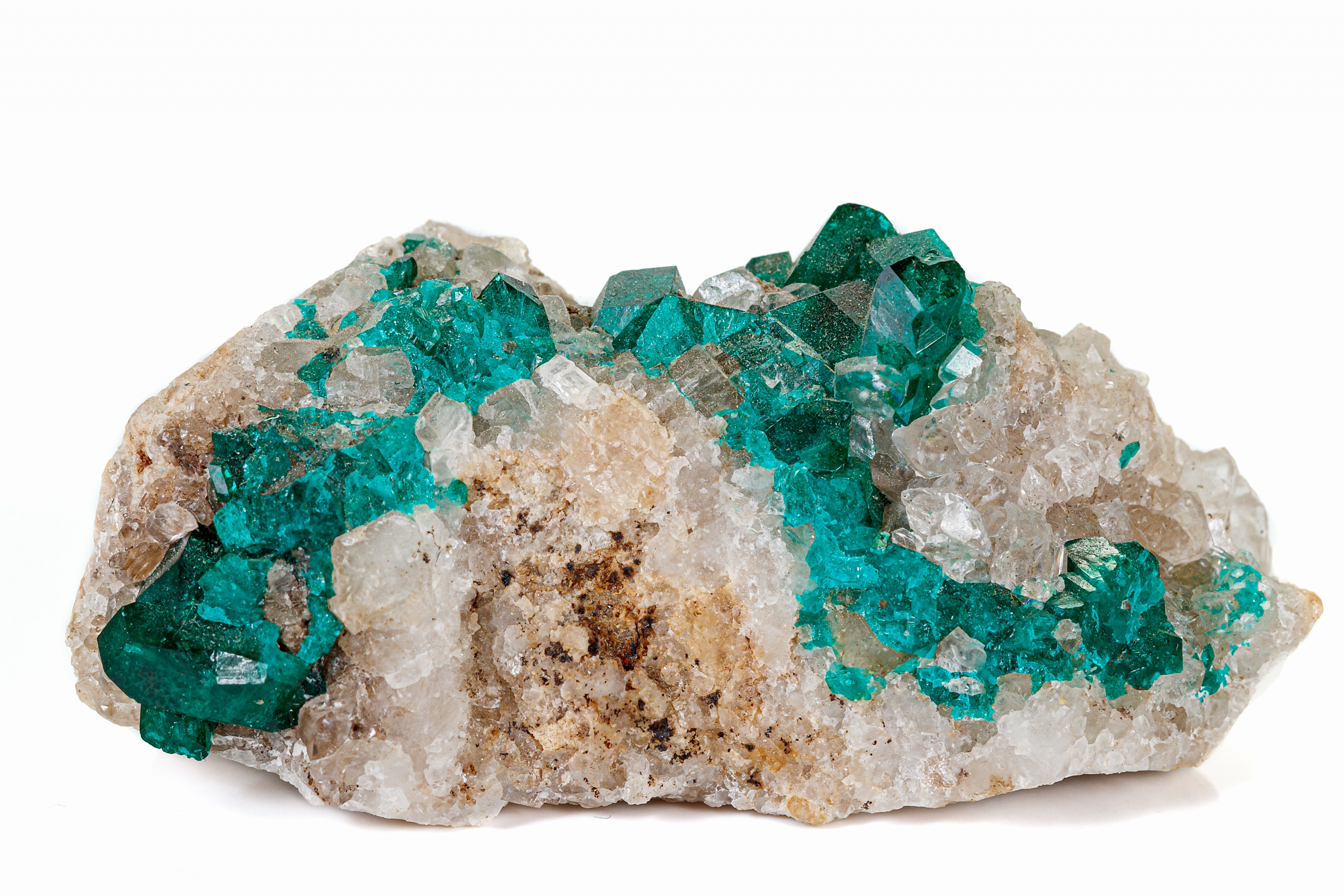

Most of what is sold in a rock shop is inert and safe to handle. Quartz, feldspar, calcite, mica, garnet, tourmaline: pick them up, no precautions needed. But a handful of minerals genuinely deserve care, and the internet is unhelpfully split between people who ignore the issue entirely and people who treat every specimen as a hazard.
Here is the practical middle. Not medical advice, just what collectors and museum staff actually do.
The general principle
Almost all mineral risk comes from one of three routes: inhaling dust, ingesting particles from hands, or dissolving something in an acid you should not have used. Intact specimens sitting on a shelf are, with very few exceptions, not doing anything to you.
Which means most of the safety story is the same four habits regardless of species. Do not grind, cut, saw or sand specimens without dust control. Do not lick minerals, and wash hands before eating. Do not put unknown material in ultrasonic cleaners or acids. Keep specimens out of reach of small children and pets, who put things in their mouths.
Those four cover essentially everything below.
Lead minerals
Galena, cerussite, wulfenite, pyromorphite, vanadinite. Galena is very common in collections and is a lead sulfide.
Handling a solid crystal briefly is low risk. The real concern is lead dust and residue transferring to hands and then to food, and this matters far more for children. Galena also tarnishes and can develop a powdery surface over time. Wash hands after handling, do not store it loose in a pocket, and never work it with a saw or grinder without proper extraction.
Arsenic and mercury minerals
Realgar and orpiment are arsenic sulfides. Cinnabar is mercury sulfide. These are the ones that warrant genuine respect.
Realgar has a second problem: it degrades in light, breaking down to a yellow powder over months to years. Powdered arsenic sulfide is exactly the form you do not want loose. Keep realgar in the dark, in a sealed container, handled minimally.
Cinnabar is fairly stable as a sulfide and the mercury is not readily bioavailable from an intact crystal, but it should never be heated, powdered or cleaned in acid.
Fibrous minerals
The asbestiform amphiboles and chrysotile. The hazard here is specifically inhalation of fine fibres, and it is a serious one.
The important point for collectors is that fibrous habit is the risk, not the mineral name. Actinolite in a blocky crystal is not the same hazard as actinolite in a fibrous mat. If a specimen looks hairy, wispy or cottony and sheds fibres when touched, seal it in a rigid closed container and leave it there. Do not brush it, do not blow dust off it, do not cut it.
Copper and soluble minerals
Malachite and azurite are copper carbonates, and copper dust is an irritant. Solid specimens are fine; the caution applies to lapidary work, where malachite dust is genuinely unpleasant and requires wet cutting and respiratory protection. Our azurite and chrysocolla and shattuckite are display pieces and need nothing beyond normal handling.
Some sulfates and halides are water-soluble and will dissolve, deliquesce or shed if washed or left in humid air. That is a conservation problem rather than a health one, and it is covered in cleaning and storing specimens.
Radioactive minerals
Uraninite, autunite, torbernite, carnotite. Genuinely radioactive, and the dominant hazard is not the external dose from a small specimen but radon gas accumulation in a sealed display case, plus dust.
Collectors who keep these store them in a ventilated space away from living areas, in sealed containers, and do not keep them in a bedroom. If you do not specifically want radioactive specimens, simply do not buy them. Note that natural irradiation is part of the story behind amethyst and smoky quartz colour, but those crystals are not themselves radioactive.
What this does not mean
It does not mean minerals are dangerous. A shelf of quartz, calcite, mica and agate poses no hazard at all. It means a short list of species deserve a container and clean hands, and that the moment you start cutting or grinding anything, dust control stops being optional. Everything else is just good housekeeping.