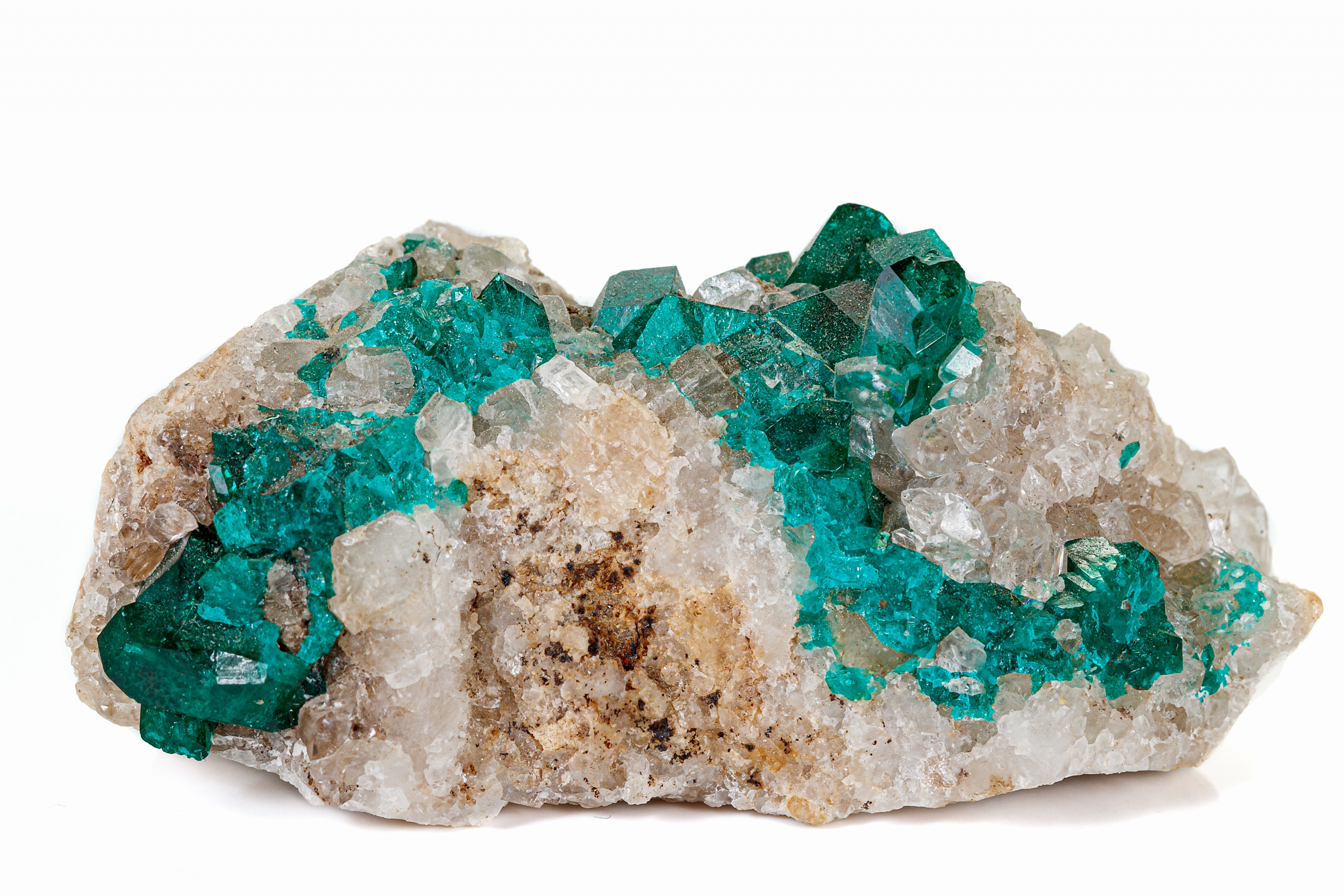

Most of the damage that happens to a rock or crystal collection doesn’t happen underground. It happens on a kitchen counter, from someone who figured “it’s a rock, it can handle water and soap.” Some specimens can. A surprising number can’t, and the difference is worth knowing before you clean anything you’d be upset to lose.
First question: does it dissolve, or does it just scratch?
Before reaching for water, check what’s actually in your hand. Selenite, a form of gypsum, sits at only 2 on the Mohs hardness scale, soft enough to mark with a fingernail, and it will slowly dissolve or turn cloudy and pitted if it soaks in water. Halite, plain rock salt, dissolves even faster, sometimes visibly, in a damp cloth. Anything under roughly 3 on the hardness scale is safer cleaned dry, with a soft brush or a puff of compressed air, than anywhere near a sink.
For most specimens, water and a soft brush is genuinely enough
Quartz, amethyst, calcite, and most crystals in the 5-and-up hardness range handle a rinse in warm water with a soft toothbrush just fine. Dry them completely afterward rather than air-drying in a pile, and skip harsh detergents or bleach, which can etch surfaces or sit trapped in crevices long after the rinse is done. One more thing worth avoiding: sudden temperature swings. Running hot water over a cold stone straight from a cool room can crack it through thermal shock the same way it would a drinking glass.
Pyrite has to stay dry, permanently
Pyrite is the one mineral in most collections that actively falls apart over time if you store it wrong. Exposed to humid air, pyrite reacts with oxygen and moisture to produce corrosive sulfuric acid, and the specimen slowly cracks, discolors, and can eventually crumble to dust, a well-documented problem museums call pyrite disease. The fix is simple: keep pyrite in a low-humidity space, ideally in a sealed container with a silica gel packet, and check on it occasionally rather than assuming it’s fine forever.
Copper minerals don’t like acid, even mild acid
Malachite, azurite, and other copper carbonates react with acidic cleaners, including something as ordinary as vinegar or lemon juice, which can etch or dull the surface. Calcite behaves the same way for a different reason: it’s a carbonate too, and it will visibly fizz on contact with acid. Malachite carries an extra warning of its own: the dust is toxic if you ever cut, grind, or sand it, so it’s a dust-and-rinse mineral at home, never a power-tool project.
Sunlight fades color, slowly but permanently
A specimen left on a sunny windowsill for months isn’t just at risk of falling, it can lose its color. Amethyst is the classic example, capable of fading toward pale gray or white under prolonged direct sun, and some fluorite and smoky quartz do the same. If the color is the reason you bought it, keep it out of direct light.
None of this takes special equipment. It just takes knowing which mineral you’re holding before you decide how to treat it.