
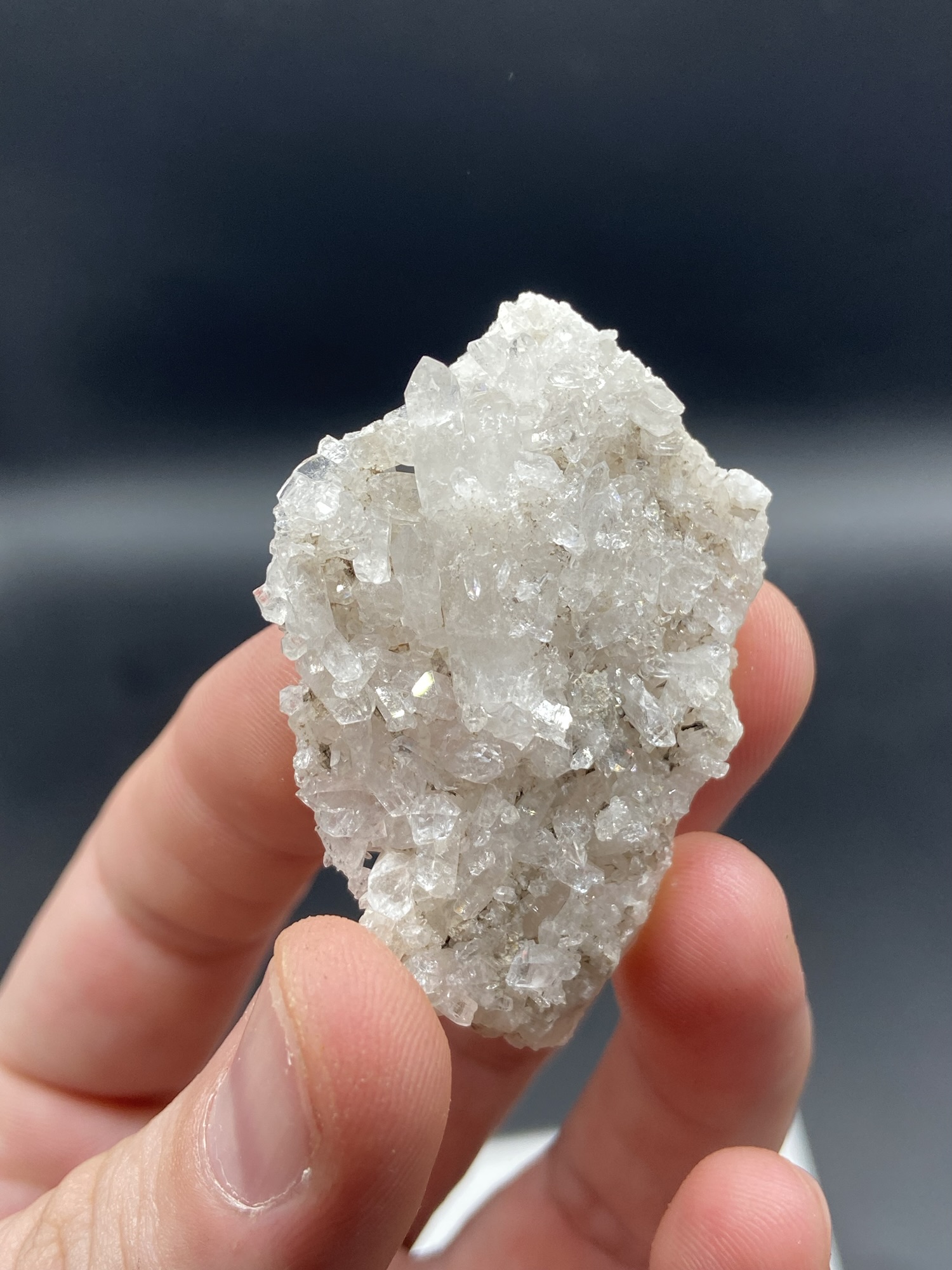
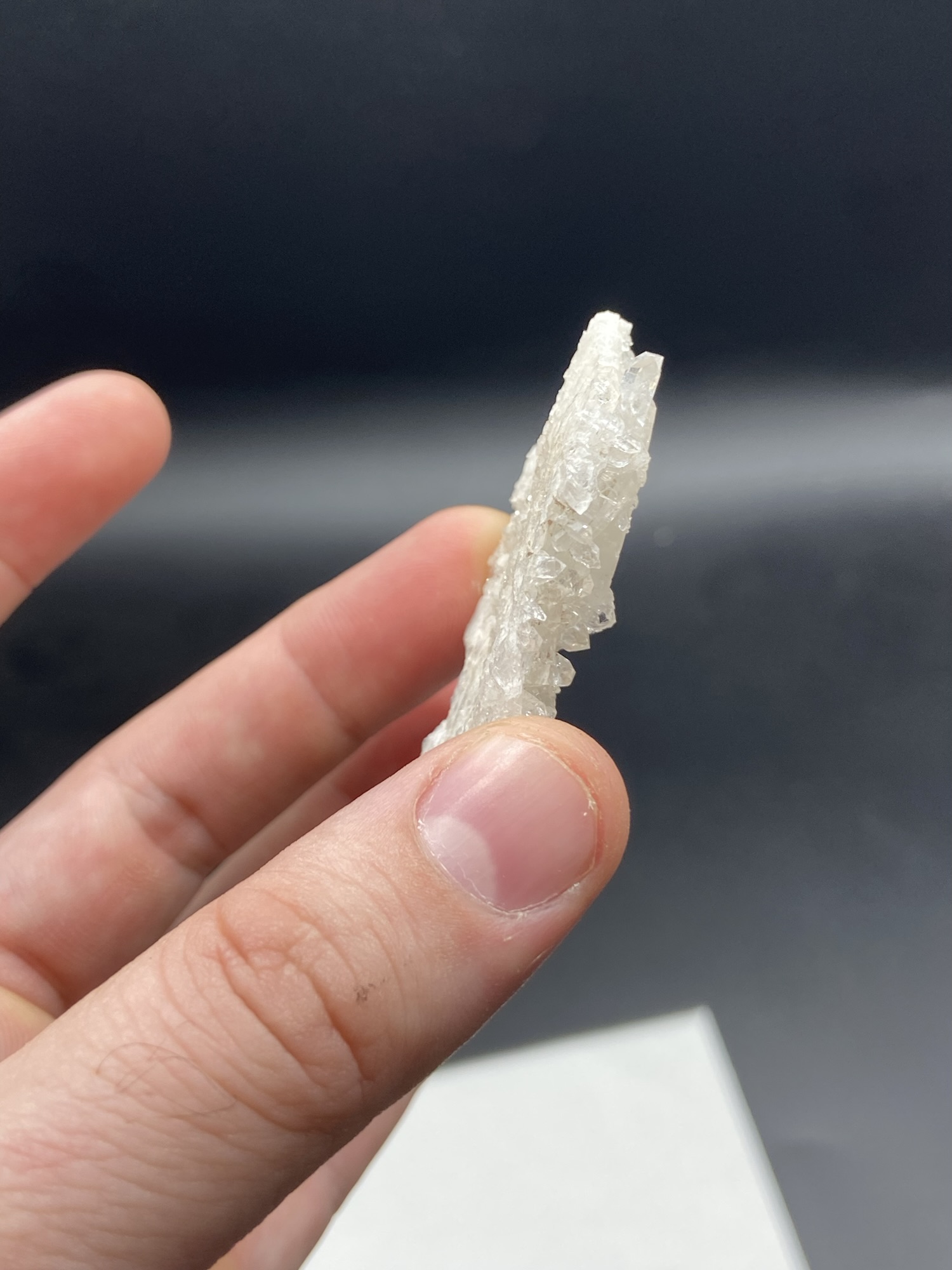
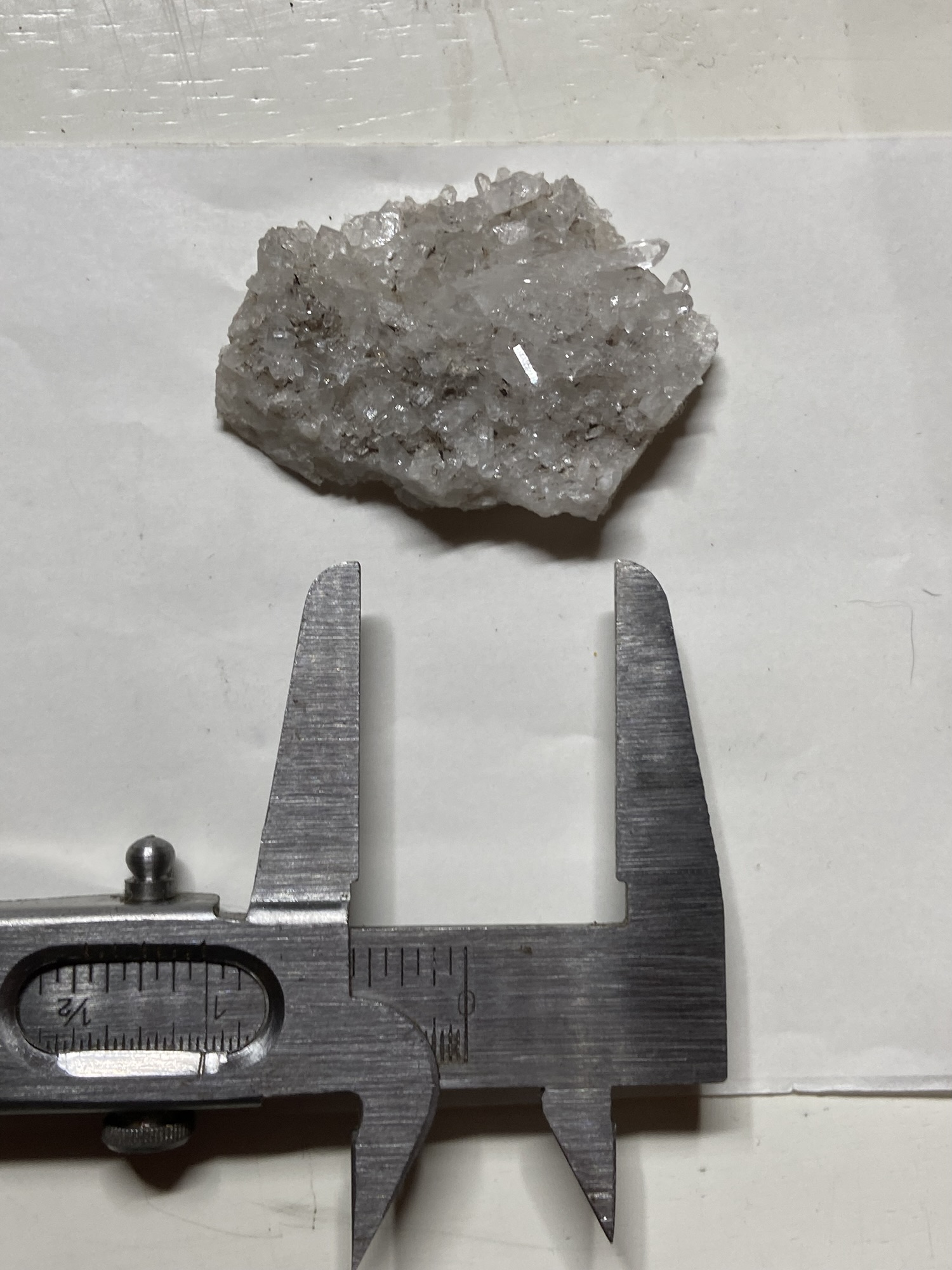
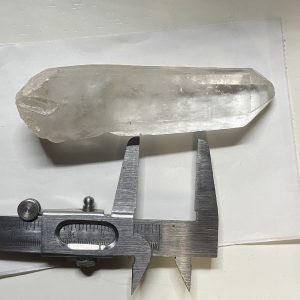
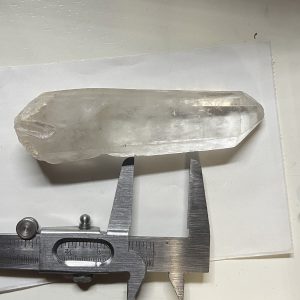
Quartz (silicon dioxide, SiO₂) is the second most common mineral in Earth’s crust, but its crystal habit varies dramatically depending on where and how it forms. This specimen comes from New Jersey, a state famous among mineral collectors for its basalt trap-rock quarries around Paterson and the Watchung Mountains, where quartz grew alongside zeolites like stilbite and prehnite in gas cavities left behind by cooling lava, and from pegmatites elsewhere in the state that produced larger, blockier crystal habits.
This piece shows the crystal habit typical of New Jersey’s classic localities — sites that have been actively collected since the 1800s and remain well known in mineralogical literature. At Mohs hardness 7, quartz holds up well to regular handling; wipe clean with a soft, dry cloth.
An affordable way to add a genuine New Jersey locality piece to a regional or quartz-focused collection.
Inside the Quartz Crystal
One mineral species, a thousand looks — quartz is the shape-shifter of the mineral world.
The story: Quartz is the second most abundant mineral in Earth’s crust, and it crystallizes in nearly every rock-forming environment on the planet — which is exactly why it shows up in this shop as clear points, milky clusters, smoky towers, ghostly phantoms, and druzy-crusted matrix, all built from the same simple formula.
Why collectors chase it: Because one species covers this much ground: a single collection can hold a dozen genuinely different-looking quartz pieces without ever repeating a mineral. Phantom growth lines, smoky color zoning, and druzy crusts each record a different chapter of how that particular crystal grew.
Care: Quartz shrugs off scratches and most chemicals at Mohs 7, but avoid sudden temperature swings (a hot dishwasher after a cold shelf can crack a large piece) and clean with a soft, dry cloth.
Reviews
There are no reviews yet.