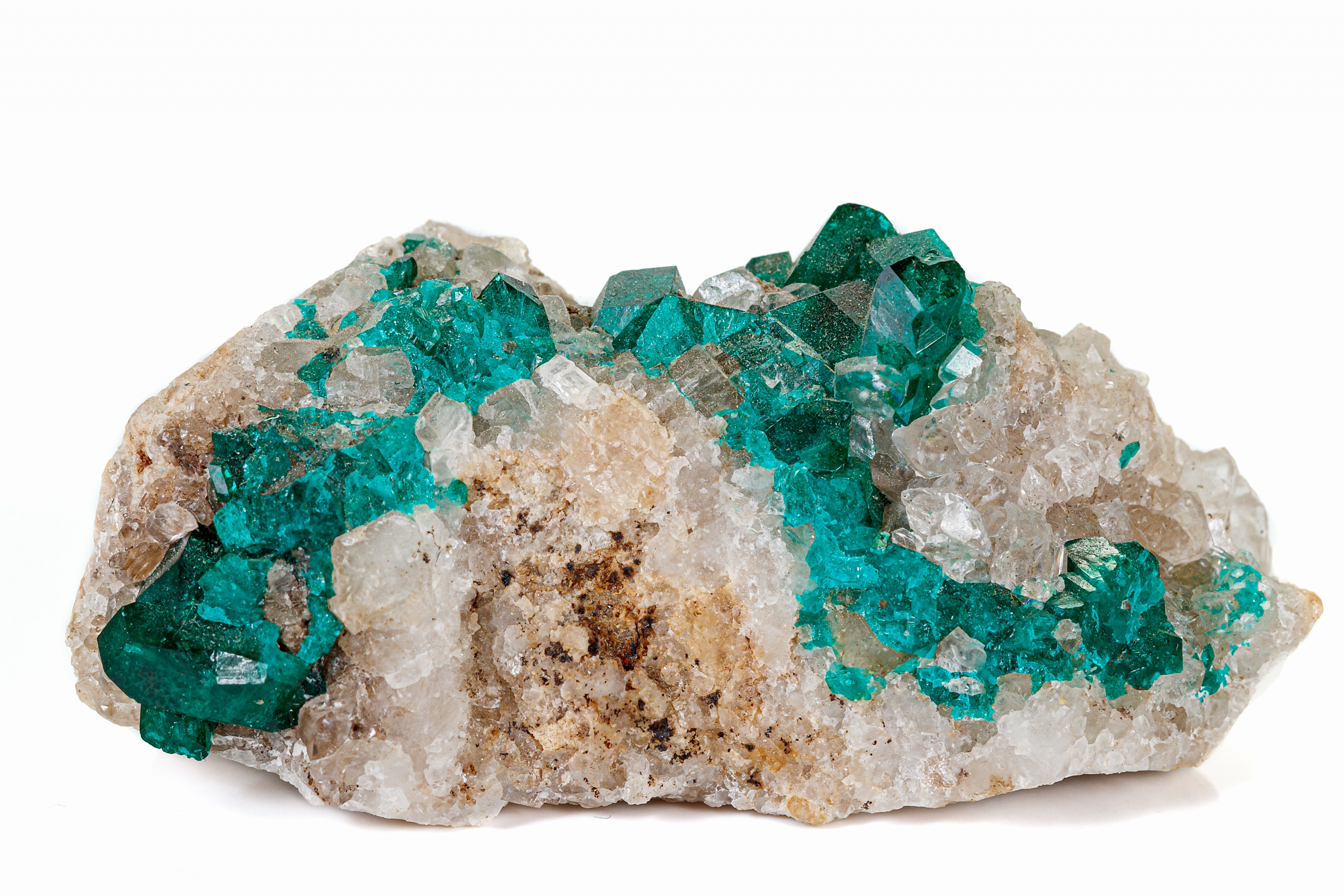

Some quartz crystals carry a faint, cloudy outline of a smaller crystal suspended inside them, like a shadow trapped in glass. It looks almost too deliberate to be natural, the kind of thing you’d expect from a lab, not a mountainside. It’s called phantom quartz, and it’s really just a crystal’s growth history, frozen in place.
A pause in growth, made visible
Quartz crystals grow in stages, adding silica layer by layer as mineral-rich water moves through the rock around them. Phantoms form when that growth briefly stops or slows, and a thin film of clay, iron oxide, chlorite, or another mineral settles over the crystal’s outer faces before quartz growth resumes and buries the older surface under new layers. The result is a ghostly outline, sometimes just one, sometimes stacked several deep, marking exactly where the crystal paused and picked back up. It’s the mineralogical equivalent of tree rings, except instead of counting years you’re looking at interruptions in the fluid chemistry the crystal was growing in.
Why New Hampshire granite is a good place to find them
Phantoms show up wherever quartz grows slowly in an open cavity with a fluctuating supply of trace minerals, which describes a lot of New England’s granite pegmatites. This milky phantom quartz cluster from New Hampshire shows faint zoning inside several of its points, the kind of subtle banding that’s easy to miss until you catch the light at the right angle. New Hampshire’s granite bodies cooled slowly enough, over long enough stretches of geologic time, for quartz crystals to grow in fits and starts rather than all at once, which is exactly the kind of stop-and-start environment phantoms need. We go over why the state’s bedrock is such reliable quartz territory in our guide to rockhounding the Northeast.
Not the same as smoky or milky
Phantoms are a growth-history phenomenon, not a color phenomenon, which is why they can turn up in almost any variety of quartz. A phantom can appear in clear quartz, milky quartz, or even smoky quartz, since the ghost outline comes from a trapped mineral film rather than the aluminum-and-radiation color centers that turn quartz brown. The two effects are independent and occasionally show up in the same crystal, which produces a smoky point with a paler phantom nested inside it.
Because the phantom sits below the crystal’s outer surface, no amount of cleaning or polishing will fade or sharpen it, it’s permanent structure, not surface texture. The clearest ones tend to show best against a strong light source held behind the point rather than direct overhead light.