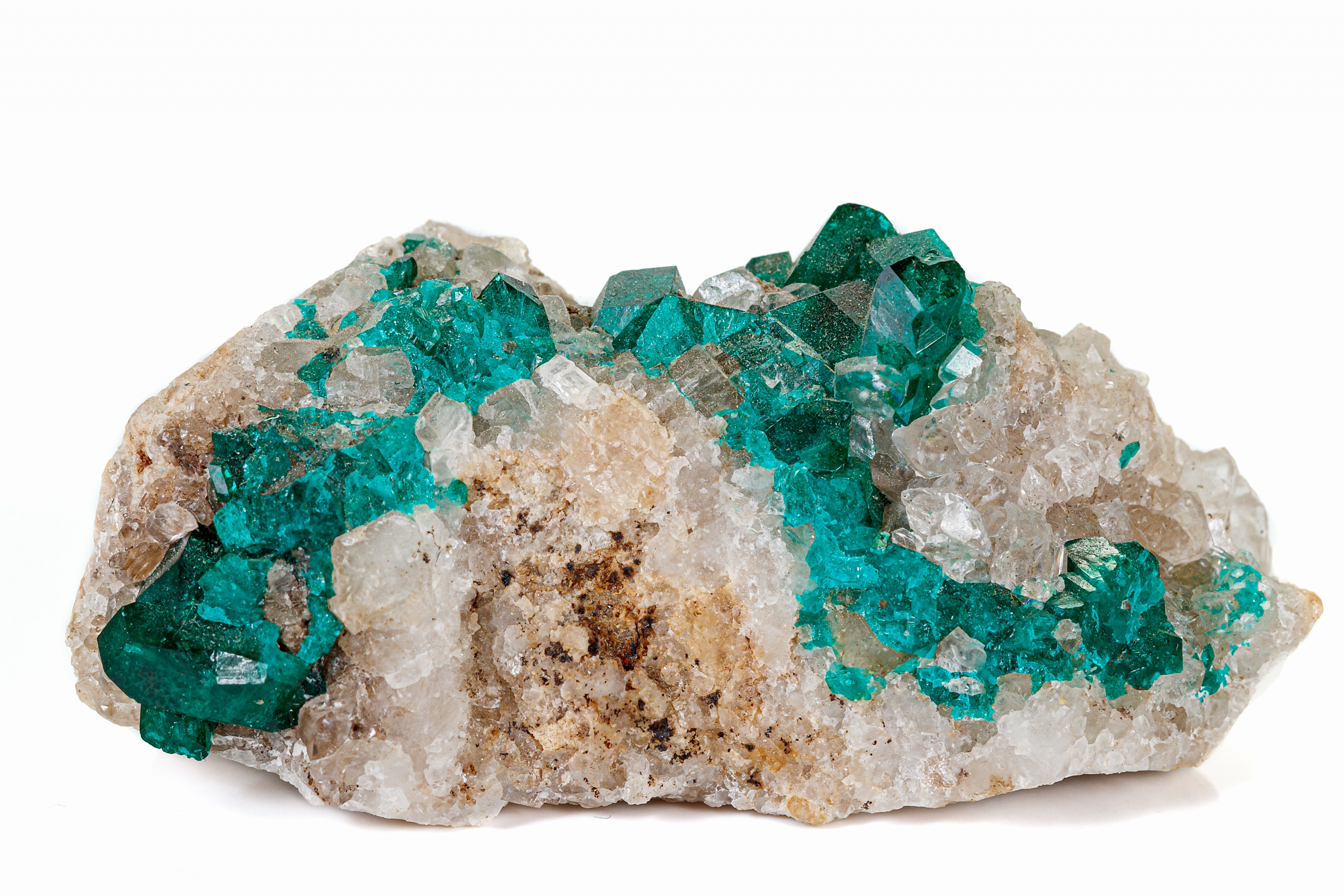

A tumbled stone looks like the least complicated object in a rock shop. It is actually one of the most time-consuming things on the shelf.
Nature does it in a river, slowly
Rounded stones exist without human help. A river does the same job with sand and gravity, over years to centuries. A rotary tumbler compresses that into weeks by doing something rivers do not: replacing the abrasive with a progressively finer one at each stage.
Stage one: shaping, about seven days
Rough is loaded into a rubber-lined barrel with water and coarse silicon carbide grit, usually 60 or 80 mesh. The barrel turns at low speed and the stones grind against each other with the grit acting as the cutting medium. This is where the shape is decided and where nearly all the material loss happens. Sharp corners, fracture edges and weathered rind all disappear.
A rough batch typically loses somewhere between a third and a half of its starting weight by the end of the process, most of it here. That is the single fact that explains tumbled-stone pricing: you are paying for rough that no longer exists.
Stage two: medium grind, about seven days
Barrel washed out completely, then reloaded with 150 to 220 mesh grit. Nothing about the shape changes much now. This stage removes the scratch pattern left by the coarse grit and replaces it with a finer one. Skipping it does not save time, it just guarantees a dull final polish, because a polish cannot hide a scratch it never removed.
Stage three: pre-polish, about seven days
500 mesh silicon carbide or aluminium oxide. By the end the stones look matte but even, with no visible pits. This is the stage most home tumblers cut short and most home tumblers regret.
Stage four: polish, about seven days
Cerium oxide, tin oxide or aluminium oxide, depending on the material. This stage is not abrasive in the same sense. The polishing compound works partly by micro-abrasion and partly by producing an extremely thin flowed layer on the stone surface. Some operators follow it with a burnishing run in plain water with a little soap and plastic pellets to clean off residue.
Four stages, four barrel cleanings, four to six weeks of continuous running for one batch.
Why batches have to be sorted
Everything in the barrel has to be roughly the same hardness. Put quartz at Mohs 7 in with something at Mohs 4 and the softer material is simply destroyed, while also failing to abrade the harder pieces properly. This is why you rarely see mixed-species tumbled bags that include both quartz and calcite.
Materials with strong cleavage are a separate problem. Fluorite and calcite will keep splitting along their cleavage planes under tumbling impact, so they either need vibratory tumbling, which applies far less impact, or they do not get tumbled at all. Our tumbled blue apatite sits at Mohs 5, soft for a tumbled stone and a good example of material that needs a gentler run than quartz would.
Rotary versus vibratory
Rotary tumblers roll. They round everything aggressively and are the right tool if you want the classic river-pebble shape. Vibratory tumblers shake instead, so stones abrade without being thrown against each other. They finish faster, waste less material, and preserve the original outline of the rough. If a tumbled stone has kept an obviously angular or elongated shape, it was almost certainly vibratory.
Two practical notes
Never pour tumbling slurry down a drain. Spent grit and rock flour set up in a trap very much like cement. Every experienced tumbler settles it in a bucket and bins the solids.
And tumbling is not a rescue operation. It will not save a cracked stone, it will open the crack. Material has to be sound going in.
Tumbled, cut, or left alone
Tumbling is one of three things you can do to rough. The other two are cutting a cabochon, which is a controlled shape rather than a random one, and leaving the piece natural. None is more honest than the others, they just answer different questions, which is the argument laid out in raw versus polished.
Next time you pick up a two-dollar tumbled stone, it represents about a month of machine time and roughly twice its own weight in rough.