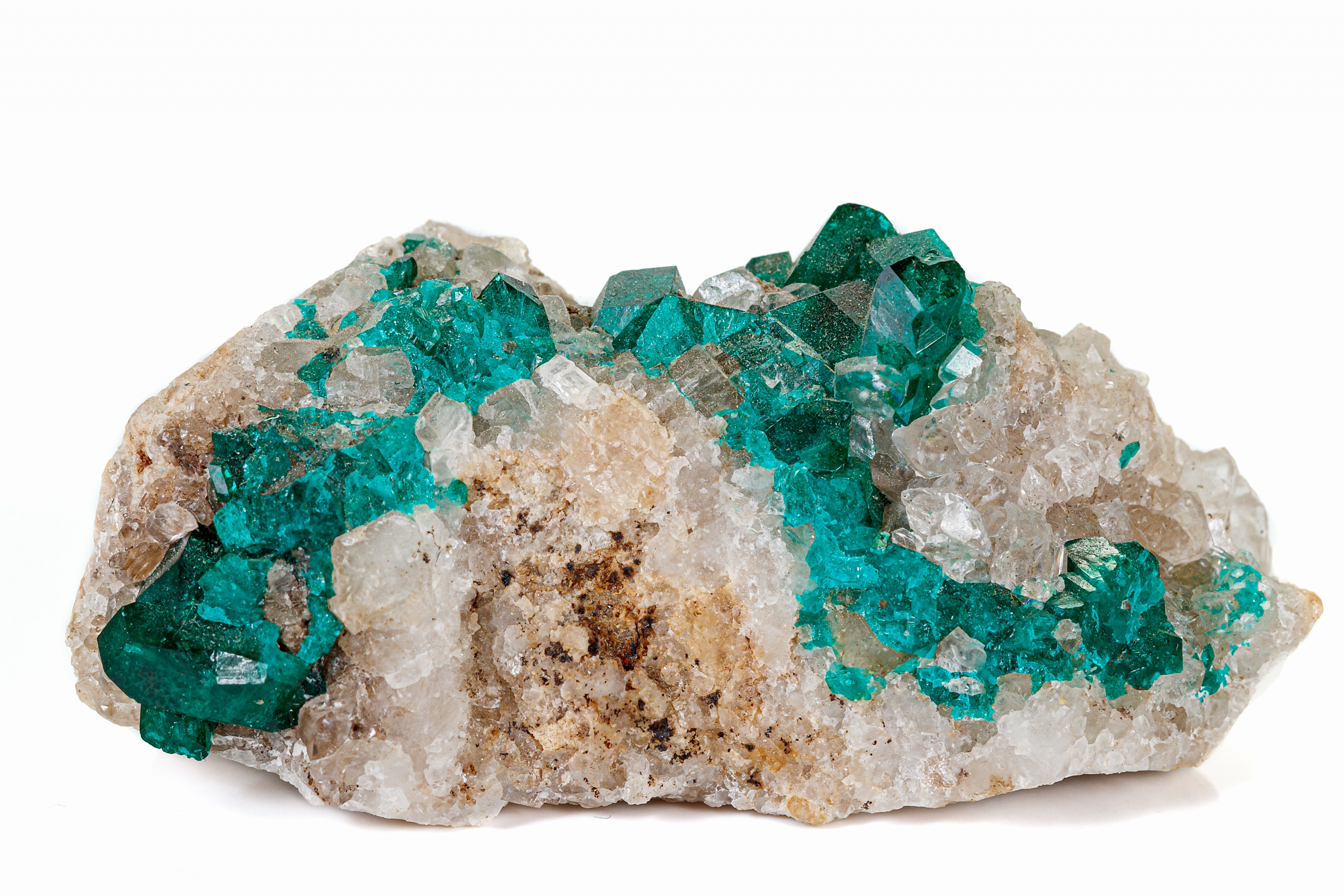

Every crystal shop sells both raw and polished versions of the same minerals, and the choice between them comes down to a few real, practical differences, not just which one looks nicer on a shelf.
What tumbling actually does
A tumbler grinds a rough piece against abrasive grit for days to weeks, working through progressively finer grades, wearing away the natural crystal faces, points, and any surrounding matrix rock until what’s left is a smooth, rounded, uniform shape. Nothing about the mineral’s chemistry changes in the process. Only the surface and the shape do.
What you gain, and what you lose
Tumbling buys durability. A polished stone has no sharp, thin points left to chip, which makes it a lot more forgiving to carry in a pocket or handle daily. It can also make rough material with small natural flaws or hairline cracks sellable in a way raw material with the same flaws often isn’t, since grinding evens out surface damage that would stand out on an unpolished face. What you lose is growth information. A tumbled stone no longer shows how the mineral actually grew, no crystal faces, no termination, no matrix, so there’s nothing left to read about the deposit it came from.
Raw specimens keep their own history
A raw or rough specimen keeps its natural crystal faces and terminations, and often the matrix rock it grew attached to. Those details are basically a fingerprint of the deposit, which is why collectors and display buyers tend to favor raw pieces over tumbled ones. It’s the same reason our locality write-ups, on Herkimer Diamonds or Stilbite’s bowtie habit, are only really visible on rough material. Tumble either one and the exact feature that makes it recognizable disappears.
Polished surfaces also hide dye more easily
There’s a downside worth flagging: the same smooth, glassy surface that makes a tumbled stone pleasant to hold also takes dye far more evenly than the uneven, faceted surface of a raw crystal. It’s part of why most of the treated material we covered in our guide to spotting dyed and heated crystals turns up polished or tumbled rather than rough.
Neither form is objectively better, they’re just different trade-offs. Most of what’s in our shop is sold raw, on purpose, because the growth history is the point.