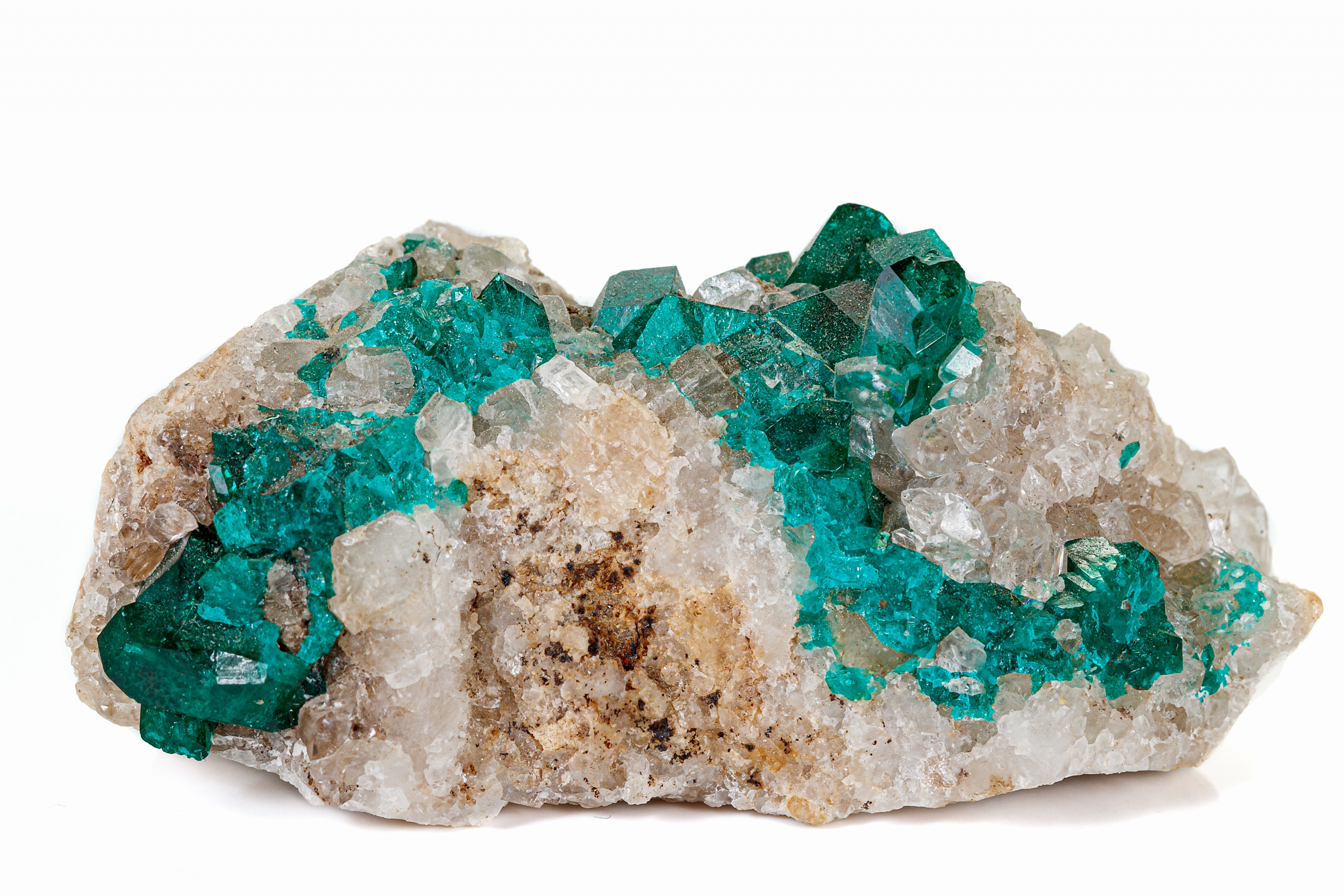

Walk a mineral show and you will hear dealers sorting their stock by words rather than measurements: thumbnails in this case, miniatures over there, a few cabinet pieces at the back. These are not casual descriptions. They are a standard vocabulary, and understanding them changes how you buy.
The classes
Boundaries vary slightly between dealers, but the widely used scheme runs roughly:
- Micromount — mounted in a small box and intended to be viewed under magnification. Often extraordinary crystals, invisible to the naked eye.
- Thumbnail — fits in a one-inch cube, about 2.5 cm.
- Miniature — roughly 3 to 5 cm.
- Small cabinet — roughly 5 to 10 cm.
- Cabinet — roughly 10 to 18 cm.
- Museum — larger than that.
The measurement is the longest dimension of the whole specimen including matrix, not the largest crystal on it.
Why the classes exist
Partly storage. Thumbnail collections live in standardised plastic boxes in drawers, and a serious thumbnail collection of a thousand pieces occupies less space than fifty cabinet specimens.
Partly competition. Mineral show display categories are judged by size class, so a thumbnail competes against thumbnails.
And mostly price. Specimen price does not scale linearly with size, it scales steeply. A cabinet specimen of the same quality as a thumbnail is not four times the price, it is often twenty or fifty times, because large undamaged pieces from a given pocket are far rarer than small ones. Collecting, packing and shipping a large piece intact is also much harder.
The quality argument for collecting small
This is the part that surprises new collectors. For a fixed budget, going down a size class buys you a dramatic jump in quality.
The best thumbnail from a famous pocket may be perfect: undamaged, sharply terminated, superb colour, ideal for its species. The cabinet piece you could afford from the same locality will likely be mediocre, with contacts, chips or dull material.
Experienced collectors overwhelmingly recommend picking a size class and sticking to it, and thumbnails and miniatures are where a modest budget goes furthest. It is the same reasoning that makes a parcel a sensible first purchase in parcel or single piece and starting a crystal collection.
Matrix counts, and it cuts both ways
Because the class is measured on the whole piece, a small crystal on a large rock is a cabinet specimen. Whether that is good depends entirely on the piece: matrix provides context, proves the crystal grew in place, and can be beautiful, which is the argument in what on matrix means. Excessive dead rock is just weight.
Trimming matrix to improve a specimen is legitimate and universal, but it is irreversible and it is very easy to destroy a piece doing it.
Where our stock sits
Most single specimens in a shop like this fall into the miniature to small cabinet range. Our black Herkimer diamond on a stand is a display piece in that band, while the eighteen-piece Herkimer parcel is thumbnail-scale material sold by the lot, which is the usual way small crystals move.
The New Jersey mineral mix on matrix is the matrix case: the specimen size is set by the rock, and the rock is the point.
Pick one and commit
A collection with a consistent size class looks like a collection. A shelf of random sizes looks like accumulation. Choosing a class is also choosing a budget, a storage system, and how many pieces you can realistically own, which are the three things that actually determine whether a collection stays enjoyable.