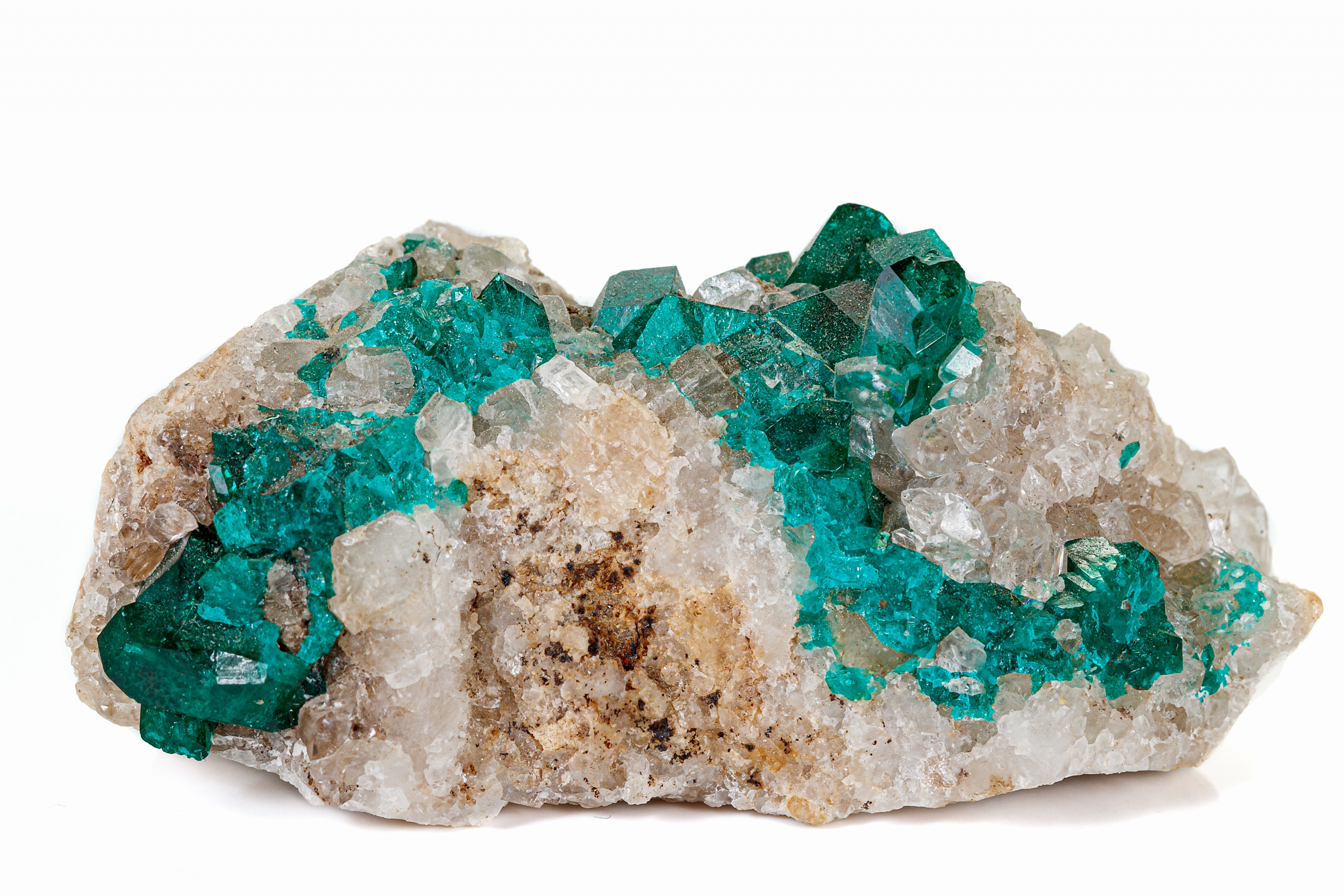

Specimen listings use the phrase constantly: “quartz on matrix,” “druzy on matrix,” “mineral specimen on matrix.” It’s easy to skim past as filler description. It’s actually one of the more meaningful distinctions in how specimens are valued, and it’s describing something specific: whether a crystal is still attached to the piece of host rock it originally grew on, or whether it’s been removed and sold as a standalone piece.
The host rock a crystal grew inside
“Matrix” is just the geological term for the surrounding rock a mineral formed in or on. Most crystals don’t grow in isolation, they grow lining the walls of a cavity, a vein, or a fracture in a larger rock mass, attached at one end to whatever rock was there first. This mixed mineral specimen from New Jersey’s trap-rock quarries keeps that full context: more than one mineral formation still sitting on its original host stone rather than separated into individual pieces.
Why keeping it attached is harder, and worth more
Removing a crystal from its matrix is often the easier and more profitable move for a dealer, loose crystals are simpler to pack, ship, and price individually. Leaving a specimen on matrix usually means it survived extraction without being knocked loose, which itself is a sign of careful handling, and it preserves information a detached crystal loses entirely: how the crystal was oriented in the cavity, what else was growing alongside it, and sometimes which minerals formed first. This druzy quartz cluster and this golden Herkimer cluster both keep their crystals attached across a full matrix surface rather than as isolated points, which is part of why dense, well-preserved matrix pieces routinely command more than a comparably sized loose crystal of the same mineral.
What to check before buying
A genuine matrix piece should show a visible, natural transition between crystal and host rock, texture and color changing gradually rather than crystals looking glued onto an unrelated base. If a specimen looks assembled rather than grown, it’s worth looking closer. Our guide to raw versus polished crystals covers a related judgment call, how much a specimen has been altered from its natural growth state versus left as found, and our guide to cleaning and storing specimens has specific notes on handling matrix pieces without knocking anything loose.