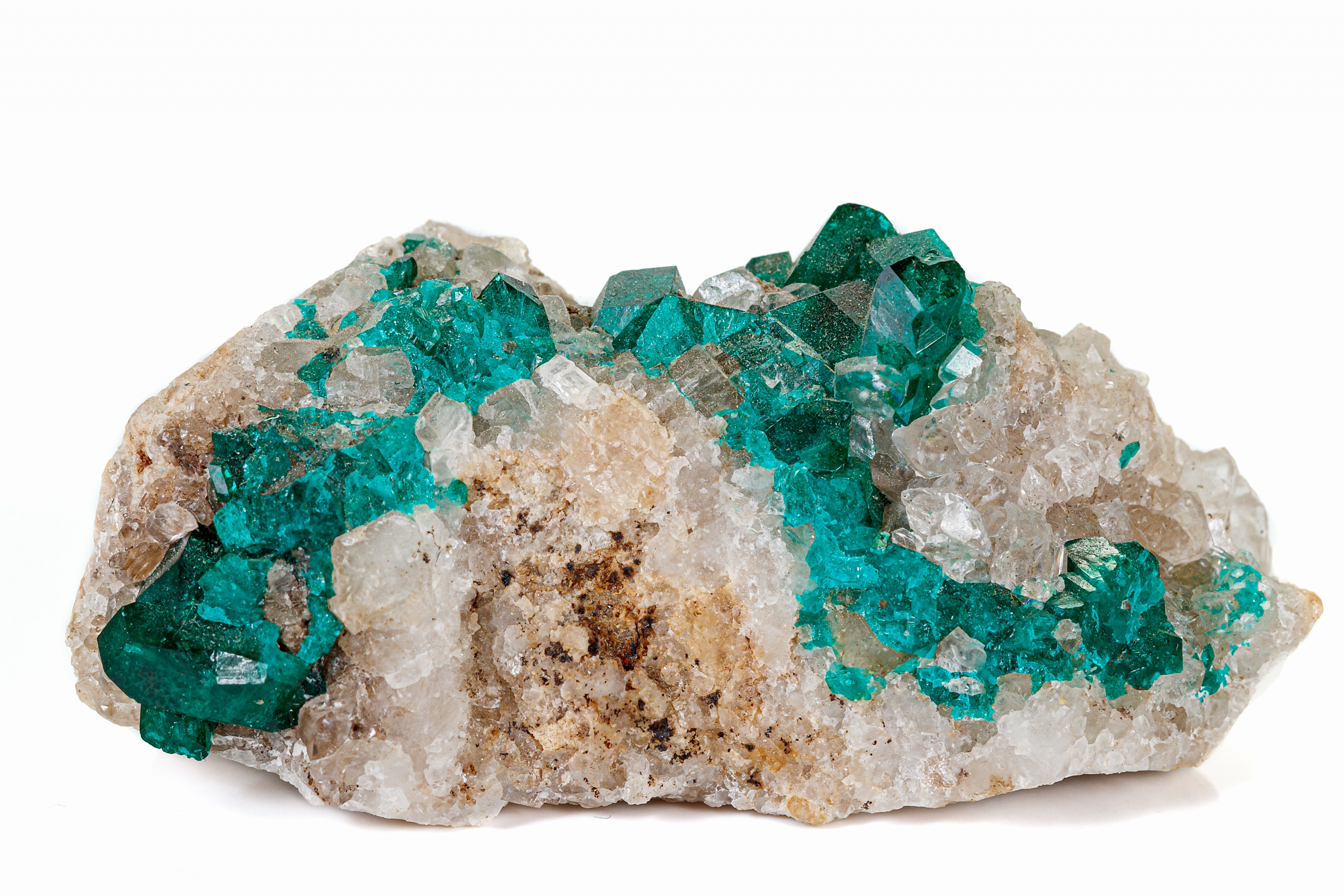

Most of the time, a mineral’s outward shape and its inner chemistry are locked together: change one and you change the other. A pseudomorph, literally “false form,” breaks that rule. It’s a specimen that has kept its original external shape while the material inside has been completely replaced by something chemically different.
Two Ways to Get There
Pseudomorphs form through a few different processes, but two are especially common. In replacement, the original mineral (or organic material) dissolves away gradually while a new mineral fills in behind it, atom by atom, preserving the outer form even as the composition changes completely underneath. In alteration, a mineral chemically transforms in place into a related mineral without ever fully dissolving, changing composition while the crystal habit carries over largely intact.
You’ve Already Got One in the Shop
We didn’t set out to sell a pseudomorph when we started stocking petrified wood, but that’s exactly what it is. Groundwater carrying dissolved silica moved through buried wood tissue and replaced the organic material cell by cell, so slowly and so precisely that growth rings, grain, and even cellular structure survive in solid quartz. The tree’s shape is real. The material it’s made of isn’t wood anymore at all.
The Classic Mineral-to-Mineral Version
The textbook mineral example is malachite after azurite: azurite crystals, exposed to weathering and groundwater, chemically alter into malachite while frequently keeping azurite’s original crystal shape, a green mineral wearing a blue mineral’s form. We cover azurite’s own color-changing chemistry, a related but separate process, in our azurite piece. Between that transformation and petrified wood sitting on the same shelf, pseudomorphs turn out to be a lot less rare than the strange name suggests, you may already be looking at one without realizing it.