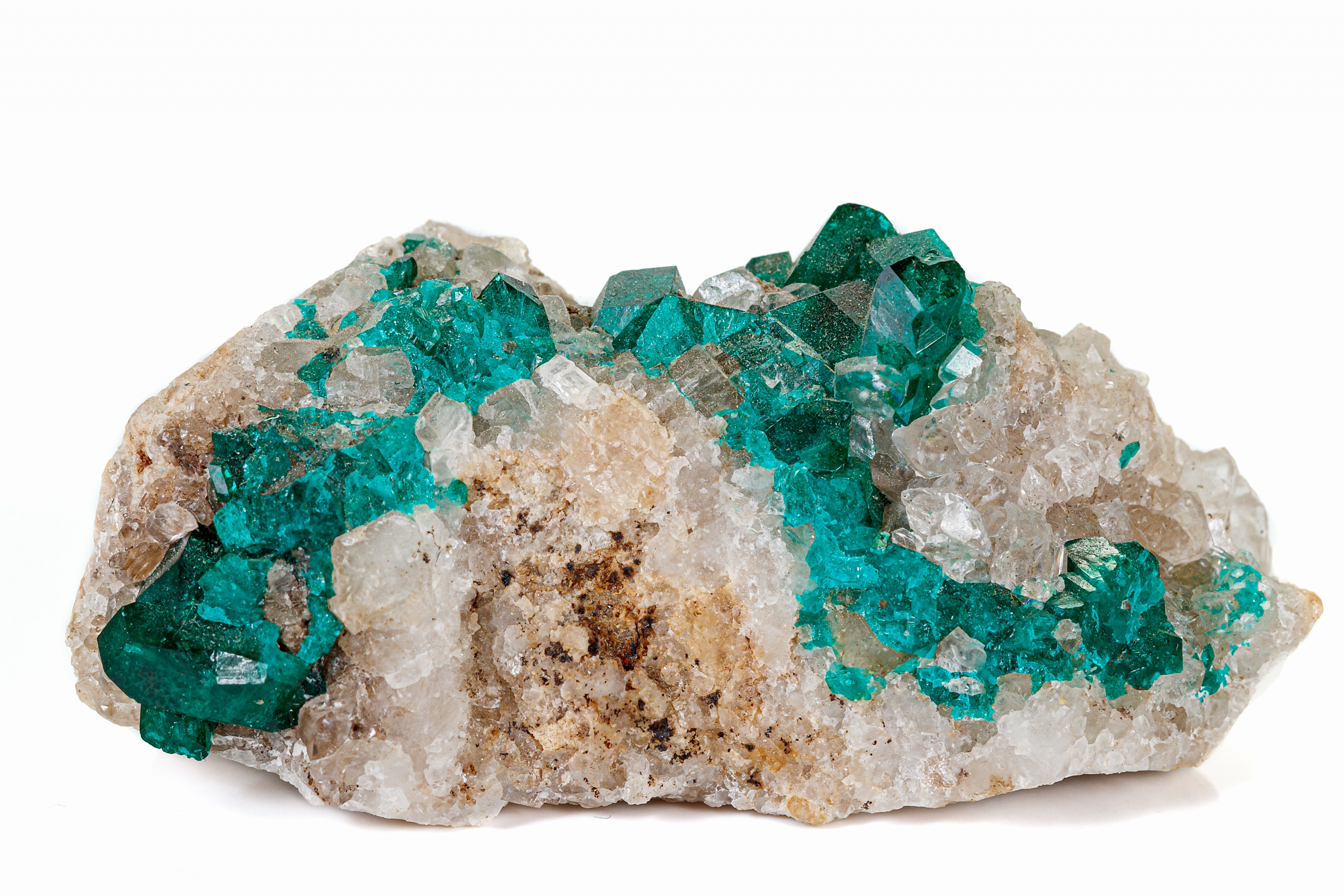

Rotate certain gemstones and, instead of staying one color, they visibly shift, sometimes subtly, sometimes dramatically enough that the same stone can look blue from one angle and nearly colorless from another. That’s pleochroism, and unlike labradorite’s structural color, it comes from something happening at the level of individual atoms absorbing light differently depending on direction.
Different absorption, different direction
Pleochroism occurs in minerals whose crystal structure isn’t symmetric in every direction, the same structural requirement behind birefringence, and it happens because the color-causing trace elements or defects absorb different wavelengths of light depending on which direction light travels through the crystal relative to its atomic structure. Kyanite, already unusual for its directional hardness, also shows visible pleochroism, and tanzanite is one of the more famous examples, capable of showing blue, violet, and burgundy from three different crystal directions in a single stone.
Why gem cutters have to plan around it
Cutting a pleochroic gemstone is a genuine technical decision, not an afterthought: a cutter has to orient the rough crystal so the finished stone’s face-up color shows its most desirable hue, since a wrong orientation can leave a gem looking washed out or an unexpected color entirely once faceted. This is part of why identical rough material can yield very differently priced finished stones depending on how skillfully the orientation was chosen before a single facet was cut.
Weakly pleochroic minerals need a specialized instrument called a dichroscope to detect the effect at all, but in strongly pleochroic material like tanzanite or iolite, the color shift is obvious enough to see simply by turning the stone in your hand under a single light source.