
“Geode” gets used loosely in casual conversation to mean almost any hollow, crystal-lined rock, and “nodule” and “vug” often get treated as rough synonyms. Geologically, the three terms describe genuinely different things, and knowing the difference actually changes what you should expect when you’re buying a specimen.
Vug: The General-Purpose Term
A vug is the broadest of the three: any cavity within rock that’s lined with crystals growing inward from the walls, regardless of the cavity’s shape or the surrounding rock type. Every geode is technically a vug. Not every vug is a geode. It’s the umbrella term underneath the other two.
Geode: A Vug With a Specific Shape and Origin
A geode is, more specifically, a roughly spherical or rounded cavity, typically formed inside sedimentary rock or a gas bubble in volcanic rock, that developed a distinct outer rind before crystals grew inward from that rind toward an open, hollow center. That hollow center is what makes cracking one open feel like an event: you genuinely don’t know what’s inside until you do it. Amethyst geodes are the best-known example, though plenty of other minerals form this way too.
Amygdule: The Volcanic-Specific Version
When a vug forms specifically inside a cooling lava flow, from a trapped gas bubble, and later fills in completely with secondary minerals, it earns its own name: an amygdule. We get into this process in more depth in our piece on how basalt grows crystals. Unlike a geode, an amygdule is typically filled solid, no hollow center left to crack open.
Nodule: No Hollow Center at All
A nodule is different from both: a rounded, solid mass of mineral material that grew within a host rock without ever having an open, crystal-lined cavity in the middle. Flint and chert nodules are classic examples, solid all the way through, nothing to “crack open” and find empty space inside. If a geode’s whole appeal is the hollow surprise in the center, a nodule’s defining feature is that there isn’t one.
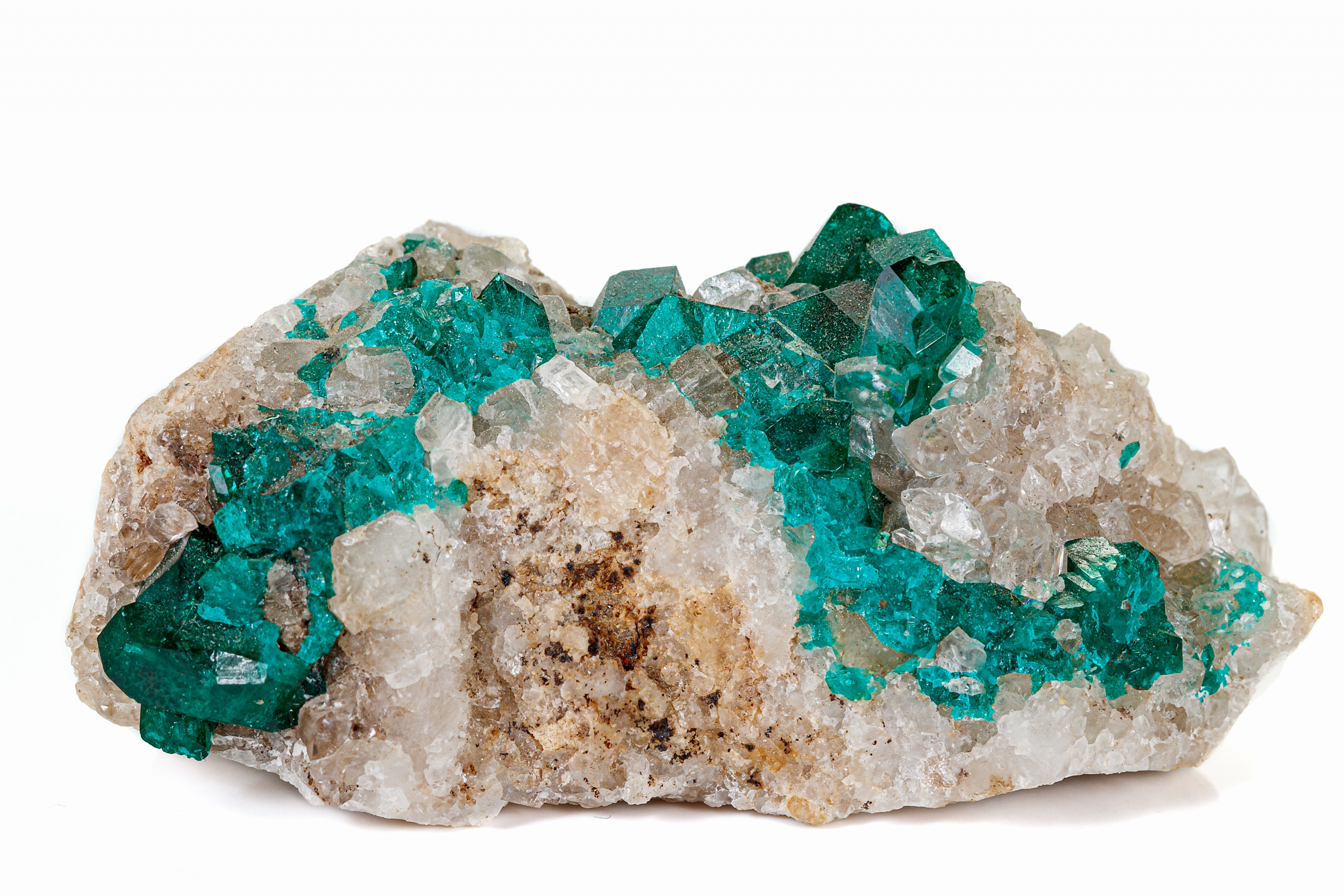
Most of the crystal clusters and druzy specimens in our shop, our quartz druzy matrix piece included, are technically vugs viewed from the outside rather than true cracked-open geodes, crystal growth on an open matrix surface rather than inside a fully enclosed rind. For more on the terminology around crystals generally, see rock, mineral, or crystal, what the words actually mean.