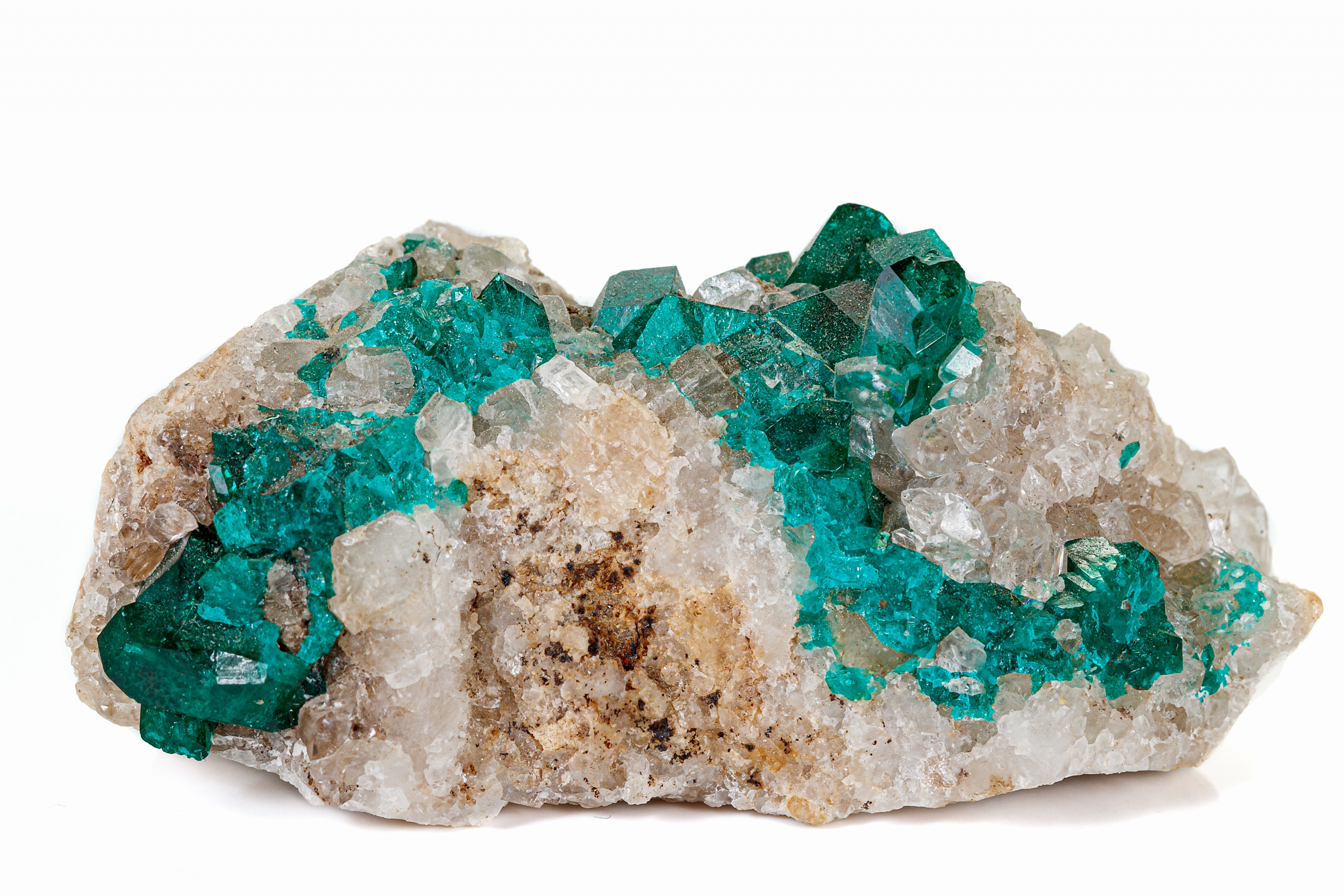

Shine an ordinary flashlight on most minerals and you get exactly what you’d expect: reflected light, same color the mineral always was. Swap that for a UV blacklight, though, and a small percentage of minerals do something genuinely strange, they glow in colors that have nothing to do with their normal daylight appearance. That’s fluorescence, and the explanation is real physics, not magic.
Borrowed Energy, Released Differently
Ultraviolet light carries more energy than visible light, energy human eyes can’t detect directly. In a fluorescent mineral, that UV energy gets absorbed by electrons in the crystal structure, which jump briefly to a higher energy state and then fall back down, releasing the extra energy as a photon. The specific wavelength of that released photon is what you see as visible-light glow, and it’s always a different, lower-energy color than the UV light that triggered it.
It Takes an Impurity, Not the Mineral Itself
Pure, chemically ideal quartz or calcite doesn’t fluoresce at all. The glow almost always comes from trace “activator” elements sitting inside the crystal structure, the same basic idea behind the color-causing trace elements we cover in our amethyst piece, just triggered by UV energy instead of visible light. Manganese is one of the most common activators, and it’s exactly why calcite is one of the most famously variable fluorescent minerals: two calcite specimens can look nearly identical in daylight and glow completely different colors under a blacklight, depending on trace chemistry neither buyer nor seller can see with the naked eye.
Worth Testing, Not Worth Assuming
Because fluorescence depends on trace chemistry that varies specimen to specimen, even within the same mineral species, we don’t label pieces as fluorescent unless we’ve actually tested them under UV ourselves. If you own a blacklight already, it’s worth passing it over any calcite, and it’s a genuinely fun way to look at a collection you already know well. Our Ohio calcite and iron-mineral pieces are both worth a look under one, alongside anything else calcite-bearing in a collection. Just don’t assume; test it and see.