
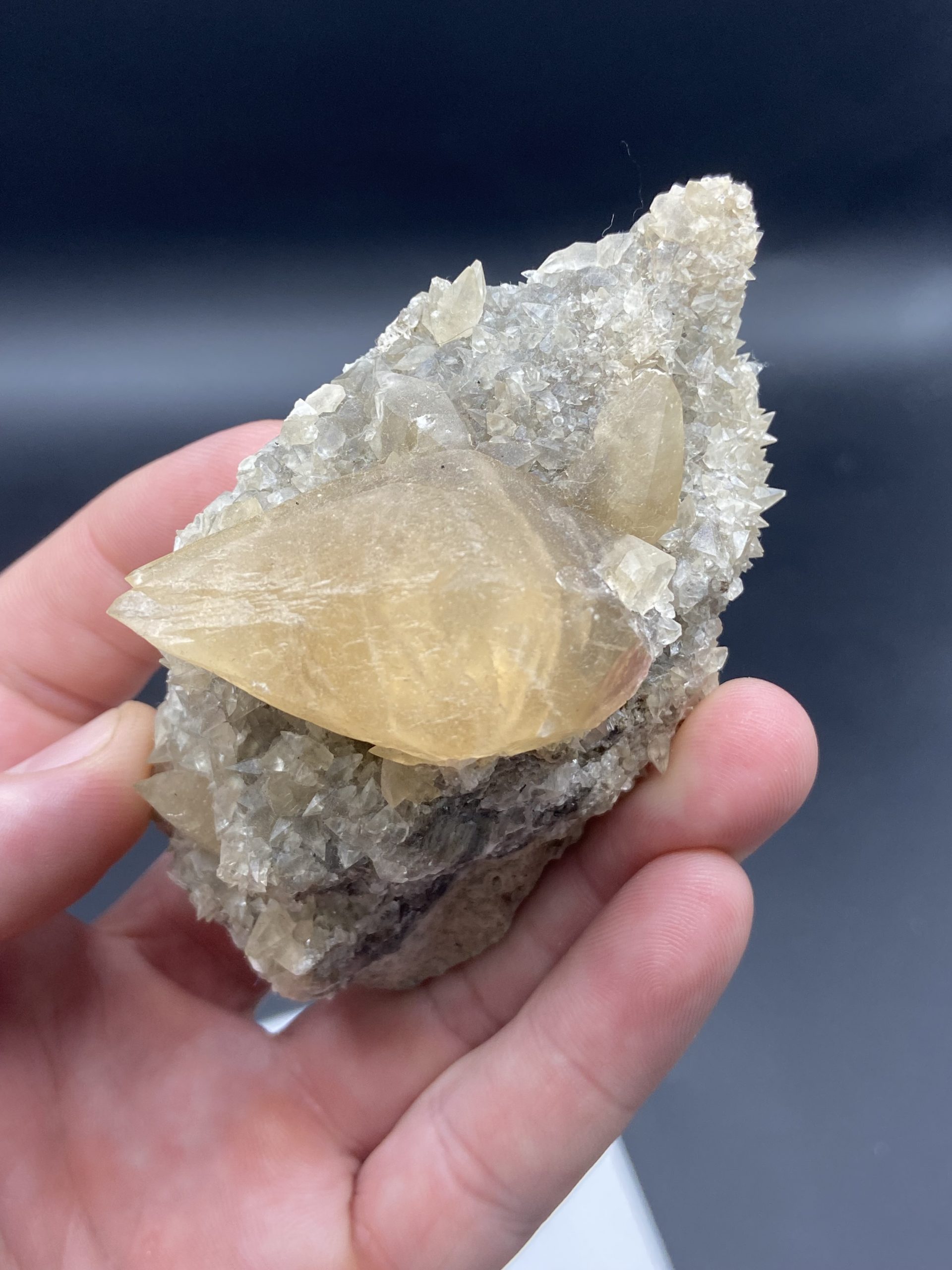
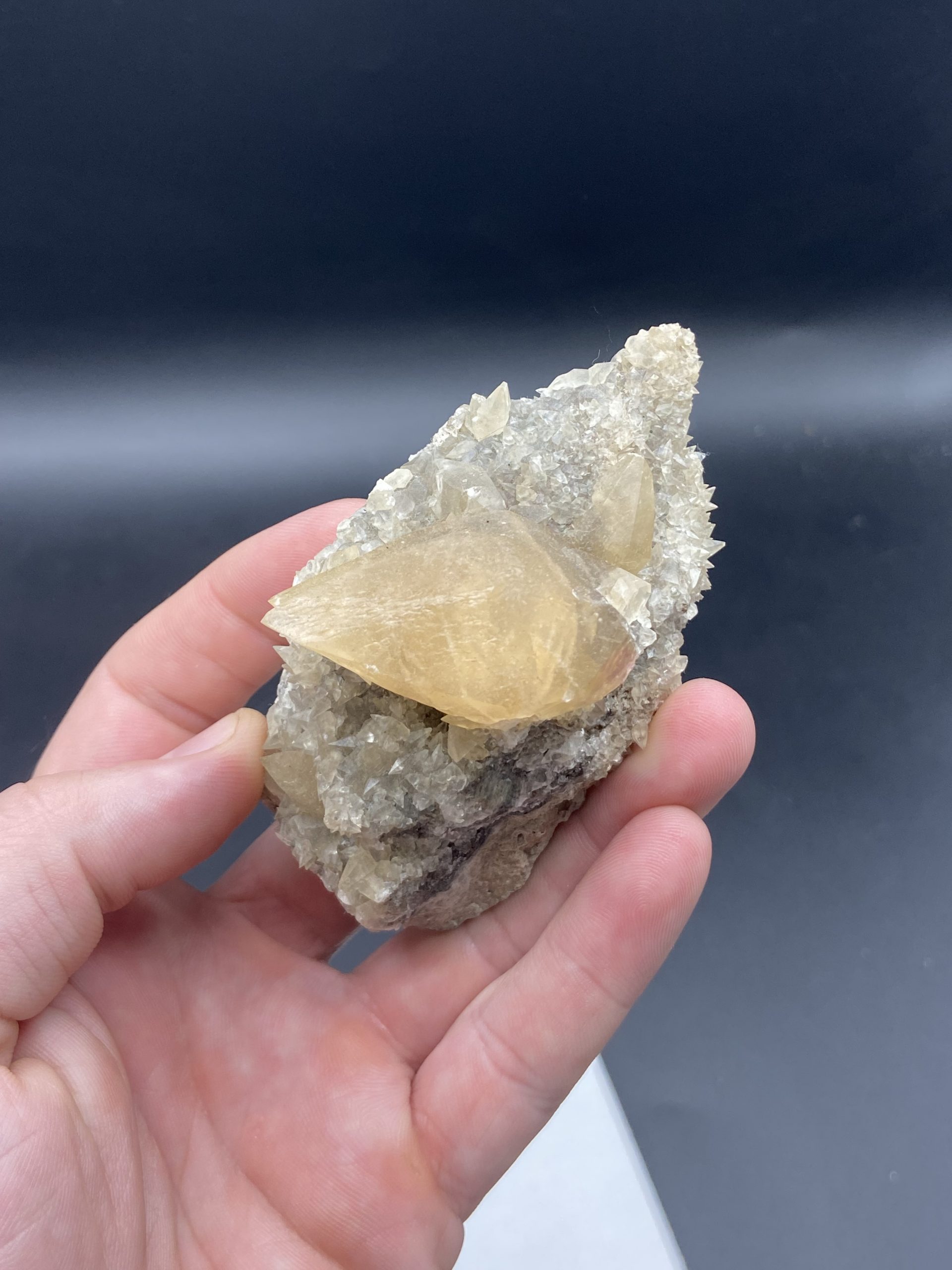
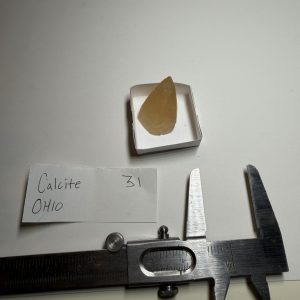
“Dogtooth” refers to a distinctive calcite crystal habit — sharp, pointed scalenohedral crystals that resemble canine teeth — one of the more than 800 documented crystal forms calcite (calcium carbonate, CaCO₃) is known to take, more variety than any other mineral. This specimen was mined in Ohio, a state whose dolomite quarries have produced some of the best-known dogtooth and scalenohedral calcite in the United States.
At Mohs hardness 3, calcite is soft enough to scratch with a knife, so it’s best displayed somewhere it won’t be bumped against harder minerals, and cleaned with just a soft, dry cloth rather than anything abrasive. Calcite also fizzes visibly when a drop of vinegar or other mild acid touches it — a simple, classic way to confirm you’re looking at calcite if you’re ever unsure.
A solid addition to any mineral collection, and a good representative piece of one of calcite’s most recognizable and sought-after crystal habits.
Inside the Calcite
One of the most common minerals on Earth — and one of the only ones you can prove is calcite with nothing but a coin and a drop of vinegar.
The story: Calcite crystallizes out of calcium-rich water almost anywhere conditions allow — caves, hydrothermal veins, sedimentary pockets — which is why it shows up in more shapes than almost any other mineral: sharp dogtooth points, flat nailhead rhombs, honey-gold masses, even the travertine that lines old hot springs. Every one of those forms is chemically the same mineral, just grown under different conditions.
Why collectors chase it: Calcite is the classic demonstration of birefringence — a clear piece laid over printed text splits the letters into a visible double image, a party trick that only a handful of minerals can do. Add in the sheer range of natural color and habit (the golden-toned Ohio pieces get their warmth from iron staining) and it’s an easy mineral to build a whole sub-collection around.
Care: This is the one to handle more carefully than most of the shop: at Mohs 3 it scratches under a fingernail-plus-effort, it splits cleanly along three flat planes if dropped (perfect rhombohedral cleavage), and it will visibly fizz on contact with vinegar or other mild acids — keep it away from acidic cleaners and store it apart from harder stones that could scratch it.
Reviews
There are no reviews yet.