
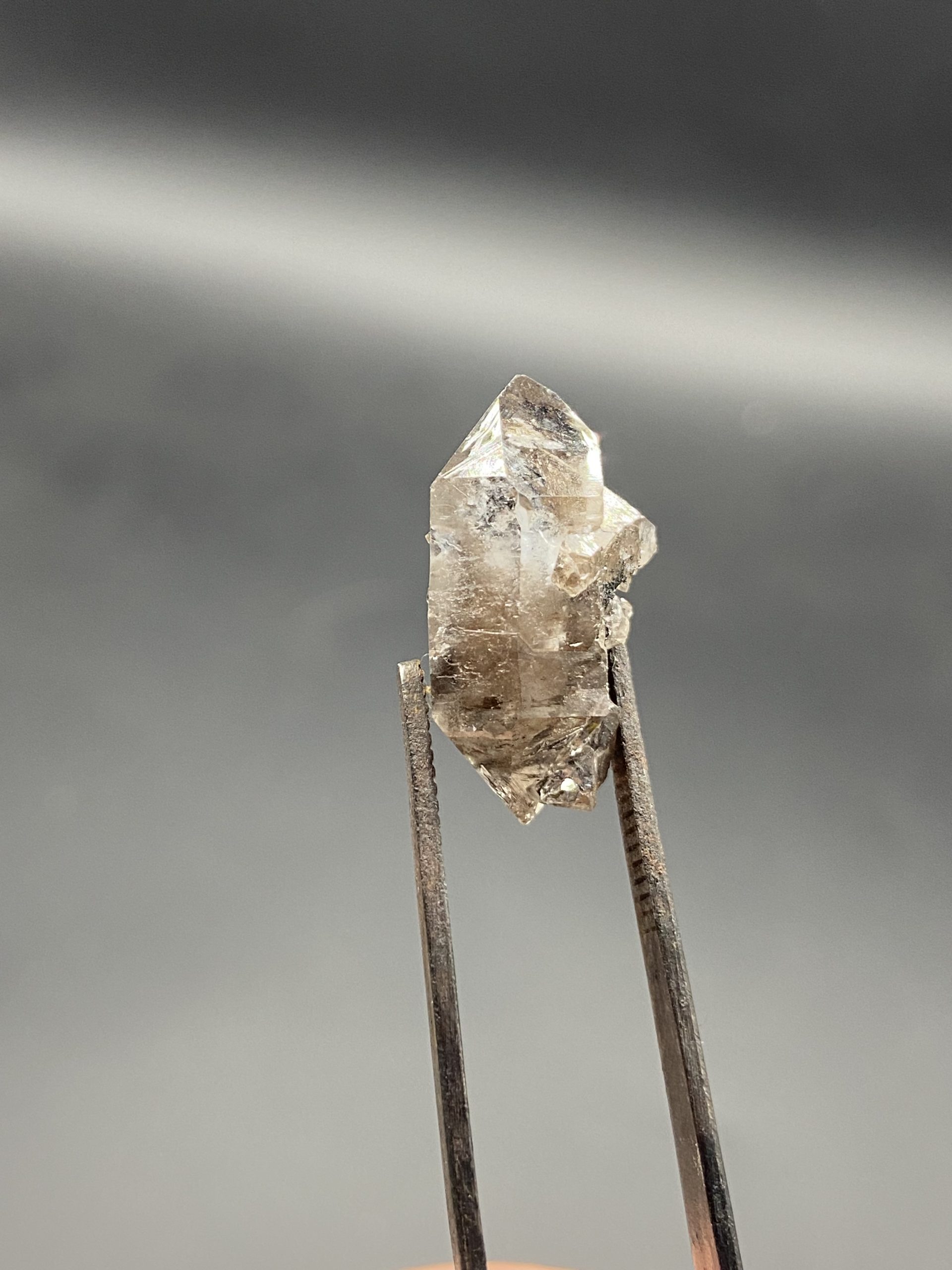
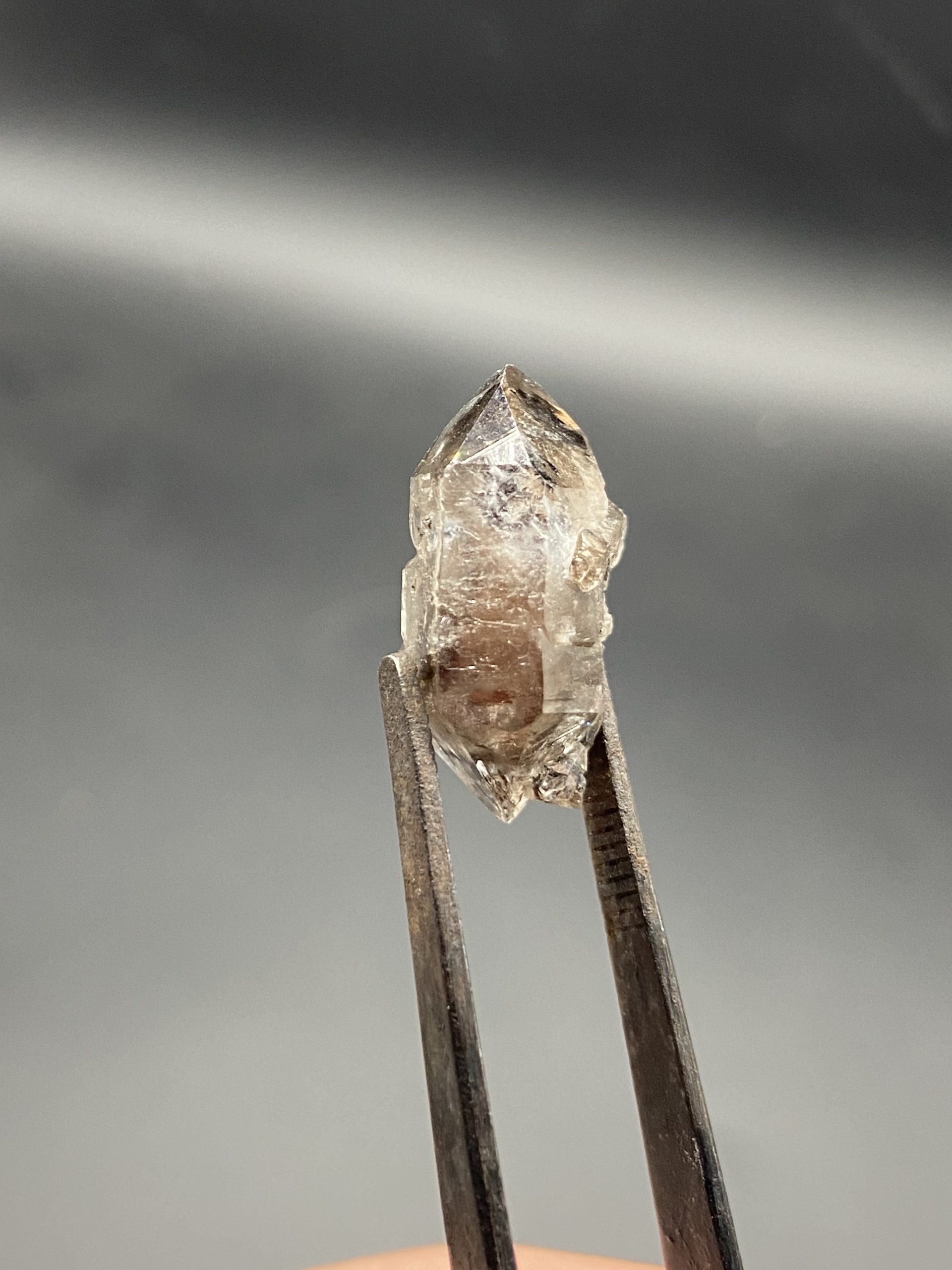
This Herkimer diamond was mined locally in New York by a close personal contact of ours, giving it direct, first-hand provenance rather than coming through a broader wholesale supply chain. Herkimer diamonds are doubly terminated quartz crystals — not true diamonds — that grow freely inside dolostone pockets in a specific stretch of New York State, developing natural facets and a point on each end without ever being cut.
This piece is a genuine, dark, double-terminated example, showing the smoky-to-black coloring that some Herkimer material displays alongside the more common clear and lightly smoky crystals. At Mohs hardness 7, it’s durable for regular handling and display, needing only a soft, dry cloth to keep its faces clean and sparkling.
An authentic, locally-sourced way to add genuine New York Herkimer diamond material to a collection.
Inside the Herkimer Diamond
Double-terminated, self-formed, and pulled from one small stretch of upstate New York — here’s what makes every piece in this family genuinely rare.
The story: About 500 million years ago, ancient seas laid down the dolostone of the Little Falls Formation across the Mohawk Valley. As the rock later cracked and shifted, silica-rich groundwater seeped into small open pockets and crystallized slowly — with nothing to attach to. That’s the whole secret: most quartz grows welded to a wall and only shows one finished point. A Herkimer diamond floats free in its pocket and grows a sharp termination on both ends, which is why even a small one already looks “finished” straight out of the ground.
Why collectors chase them: True double termination is uncommon in nature, and the exceptional clarity these crystals can reach — combined with a locality that exists nowhere else on Earth in this form — is what separates a “Herkimer” from ordinary quartz. Some carry smoky color, phantom growth lines, or tiny trapped inclusions, so no two parcels ever look quite the same.
Care: At Mohs 7, quartz shrugs off everyday handling, but those double points are genuinely sharp — store loose pieces so the terminations aren’t grinding against each other, and clean with a soft, dry cloth.

Reviews
There are no reviews yet.