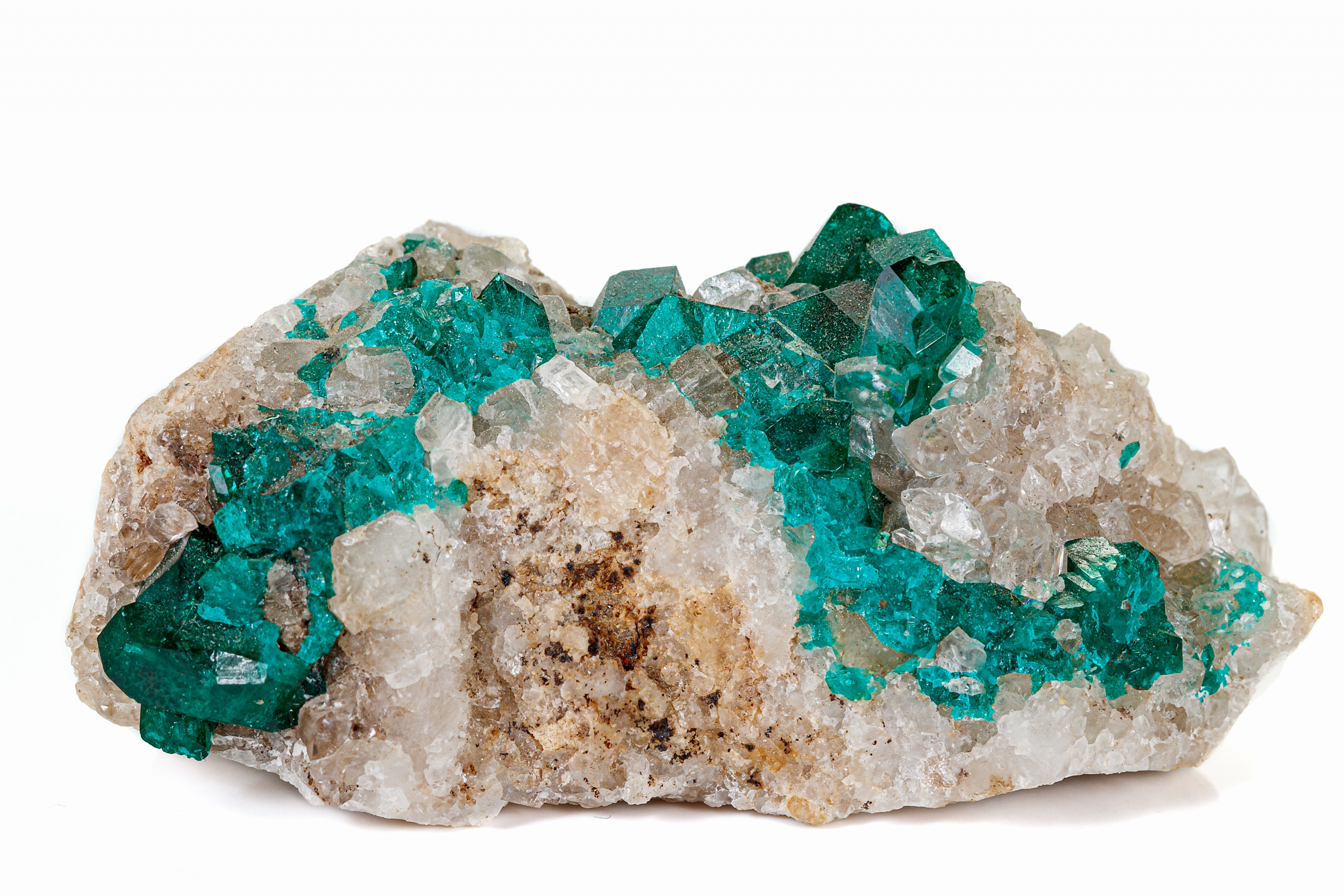
Quartz is the second most common mineral in the Earth’s crust, which almost makes it sound like it shouldn’t be exciting. Then you crack open a piece of New Hampshire granite pegmatite and find a crystal-lined pocket the size of a bowling ball, and the “common” part stops mattering.
Why New Hampshire calls itself the Granite State
The nickname isn’t just branding. Around 350 to 400 million years ago, during a mountain-building event called the Acadian Orogeny, molten rock pushed up through the crust and cooled into the granite bedrock that still defines the state’s landscape. Later pulses of magma, part of what geologists call the White Mountain Magma Series, injected pegmatite dikes into that granite: coarse-grained pockets rich in quartz, feldspar, and mica.
A quartz core, mined for something else entirely
One of the best-documented examples is the Ruggles Mine in Grafton County, which opened in 1803, not for quartz but for isinglass, the old trade name for sheet mica used in stove windows and lantern panes. Miners cutting into the pegmatite found textbook zonation: a solid quartz core at the center, wrapped in graphic granite, then blocky feldspar, then mica-rich outer zones. Nearly two centuries of digging later, that same geology has also produced beryl crystals over a foot long.
Why milky quartz is cloudy instead of clear
Clear quartz and milky quartz are chemically identical, silicon dioxide and nothing more. The difference is what got trapped inside while the crystal was growing. Milky quartz forms fast enough, or under turbulent enough conditions, that microscopic fluid droplets get sealed inside the crystal lattice instead of being pushed out. Light hitting those droplets scatters in every direction instead of passing straight through, which is what turns a transparent crystal opaque white, the same optical effect as fog, just frozen in stone instead of floating in air.
New Jersey’s version of the same story
Head south and the pattern repeats. New Jersey’s Franklin and Sterling Hill area sits on its own marble and gneiss belt, better known worldwide for fluorescent zinc ores, but it produces plenty of milky quartz clusters as a byproduct of the same mining that made the region famous. Between New Hampshire’s pegmatites and New Jersey’s mining district, the Northeast has quietly stayed one of the more reliable domestic sources of quartz specimens in the country.
The most common mineral on Earth still had to work for it, cloud, crystal face, and all, just like everything rarer sitting next to it in the case.