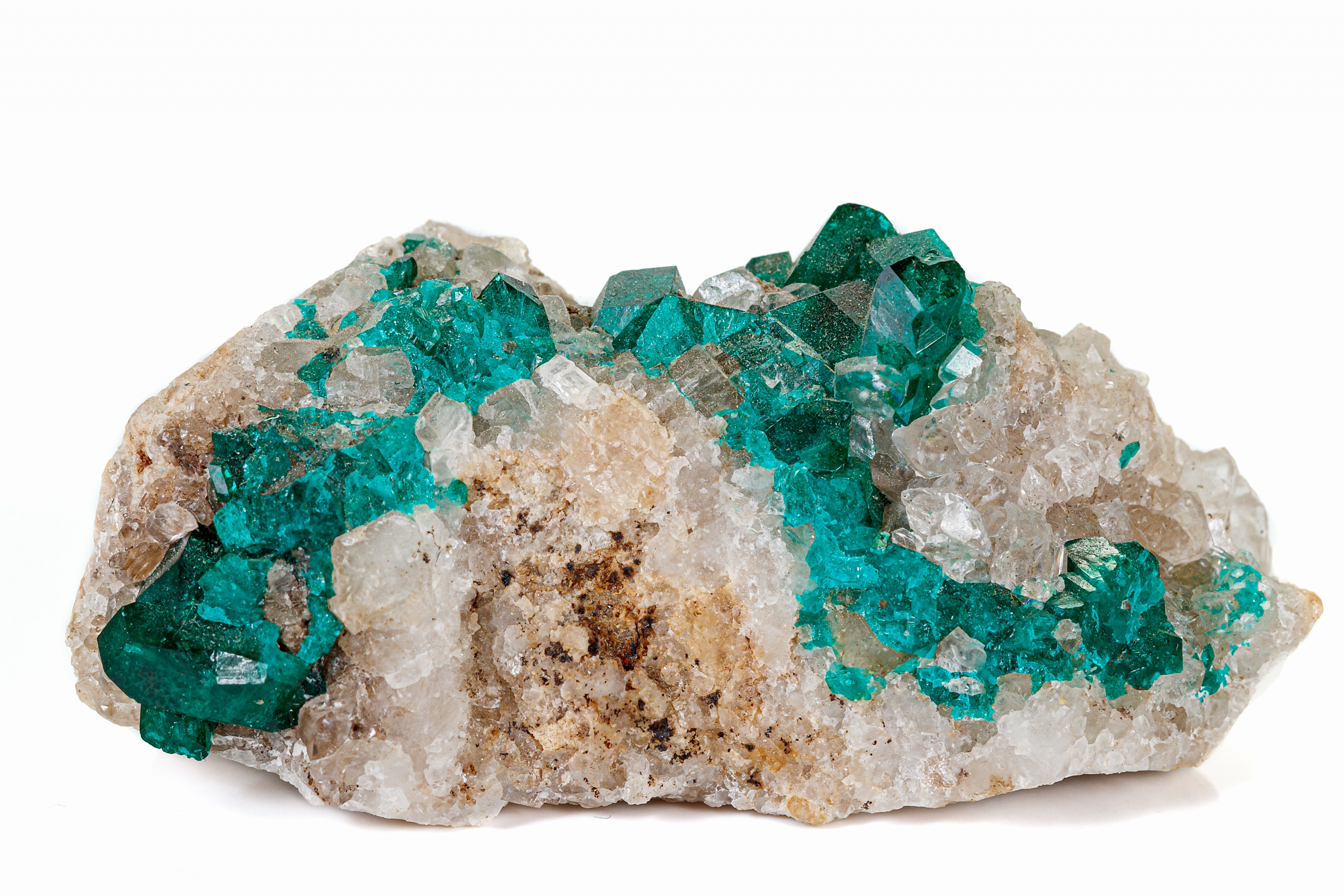

A huge share of the world’s crystal specimens, and most of its metal ore, formed the same basic way: hot water moving through cracks in rock, dissolving minerals in one place and depositing them in another. That process is a hydrothermal vein, and it’s one of the most productive mineral-forming mechanisms on Earth.
Water as a chemical delivery system
Deep in the crust, water heated by nearby magma or simply by depth becomes chemically aggressive, capable of dissolving silica, metal sulfides, and carbonate minerals out of the surrounding rock. As that superheated, mineral-saturated water migrates upward through fractures toward cooler, lower-pressure rock, it can no longer hold as much dissolved material in solution, and minerals begin precipitating out directly onto the walls of the crack, building inward from the fracture’s edges toward its center over repeated cycles of fluid flow.
New Jersey’s quarries are a textbook example
The zeolite minerals that made New Jersey’s trap-rock quarries famous, stilbite and prehnite among them, formed through exactly this process, hydrothermal fluid moving through gas cavities in cooling basalt long after the lava itself had solidified, depositing new minerals inside spaces the original eruption had left behind. Our piece on Paterson’s trap-rock quarries covers that specific locality in more depth.
Vein thickness, crystal size, and mineral purity all depend on how long a given fracture stayed open and how many separate pulses of fluid moved through it, which is why a single hydrothermal vein can show noticeably different mineral bands at different points along its length, a direct record of how the fluid chemistry shifted over the vein’s active lifetime.