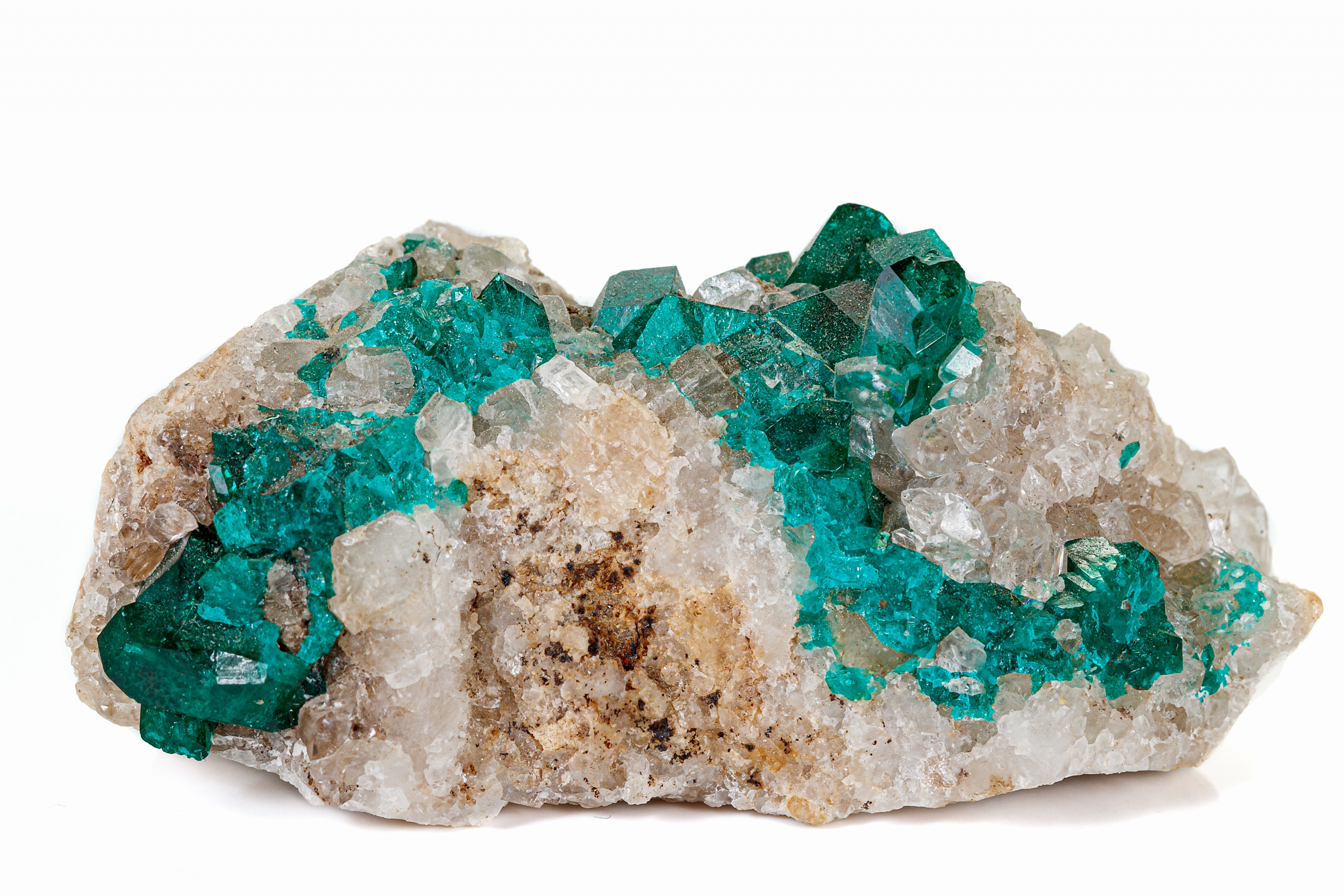

“Shiny” isn’t precise enough for mineral identification, and mineralogists settled on a specific vocabulary for exactly how a mineral’s surface reflects light, called luster, centuries before more sophisticated tests were widely available. It remains one of the fastest field checks for narrowing down what a specimen might be.
Metallic and everything else
The broadest split is metallic versus non-metallic. Metallic luster looks like polished metal, opaque and highly reflective, the look of galena or pyrite, and it generally signals a mineral with metal atoms bonded in a way that lets electrons move freely across the surface, absorbing and reflecting light the way any metal does. Non-metallic luster covers everything else, and it splits into further categories: vitreous, glassy, the most common type and the one most quartz and beryl specimens show; pearly, an iridescent sheen typical of minerals with fine cleavage like selenite; silky, a fibrous sheen from parallel fibrous crystals; greasy, looking faintly oily; and adamantine, an unusually brilliant, diamond-like shine tied to very high refractive index.
Reading it correctly
Luster is best judged on a fresh, unweathered surface, since tarnish, coatings, or surface weathering can mute or completely mask a mineral’s true luster, which is part of why an experienced collector will often knock off a small fresh edge before making a call. It’s also worth remembering luster describes the surface’s optical response to light, not its color, two minerals can share an identical vitreous luster while being completely different colors, and two similarly colored minerals can have distinctly different luster once you know what to look for.