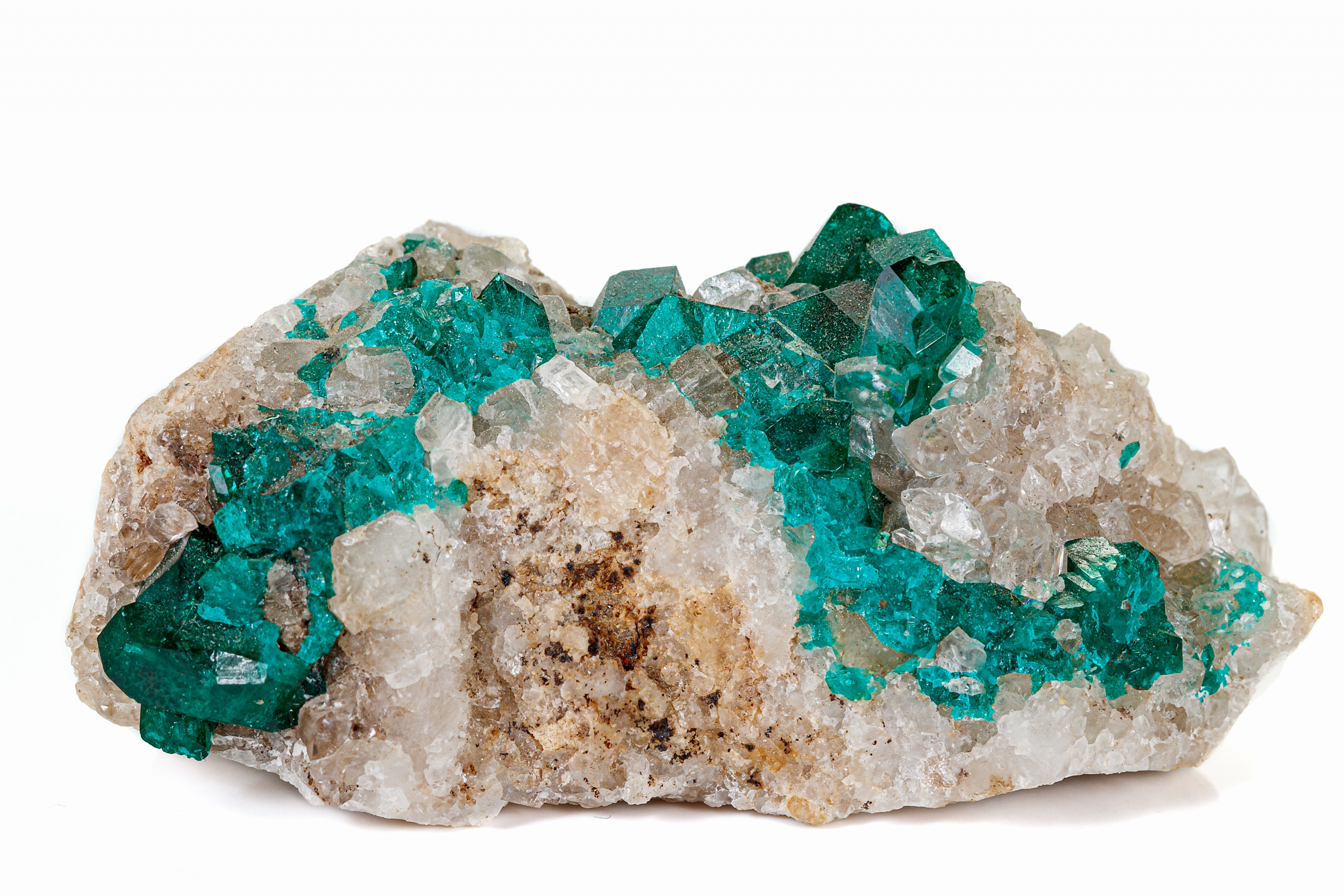

Break two different minerals and you’ll often get two completely different results: one splits along a flat, mirror-smooth plane, the other shatters into an irregular, jagged surface. That difference has names, cleavage and fracture, and it comes down entirely to whether a mineral’s atomic structure has a built-in weak plane to break along.
Cleavage follows the structure
Cleavage happens along planes where atomic bonds are genuinely weaker than in every other direction through the crystal, a direct consequence of the mineral’s internal architecture. Mica’s famous ability to peel into thin sheets is perfect basal cleavage in one direction, splitting cleanly and repeatedly along the same plane because mica’s structure is built from stacked layers with weak bonds specifically between them. Some minerals show cleavage in several directions at once, halite and galena both cleave into cubes because they have three cleavage directions at right angles, while others, like quartz, have essentially none.
Fracture is what’s left over
Fracture describes how a mineral breaks when it has no cleavage plane to follow, or when a break happens across a direction cleavage doesn’t cover. Quartz’s smooth, curved conchoidal fracture is the most recognizable example, but fracture also shows up as uneven, splintery, or hackly, depending on the mineral’s internal structure and, for metals especially, how the atoms deform rather than simply separate.
Neither property says anything about hardness, a mineral can be extremely hard and still cleave easily, like fluorite at 4 on the Mohs scale splitting into perfect octahedra, or hard and fracture-only, like quartz at 7. They’re independent tests, and used together, they narrow down an unknown mineral’s identity faster than either one alone.