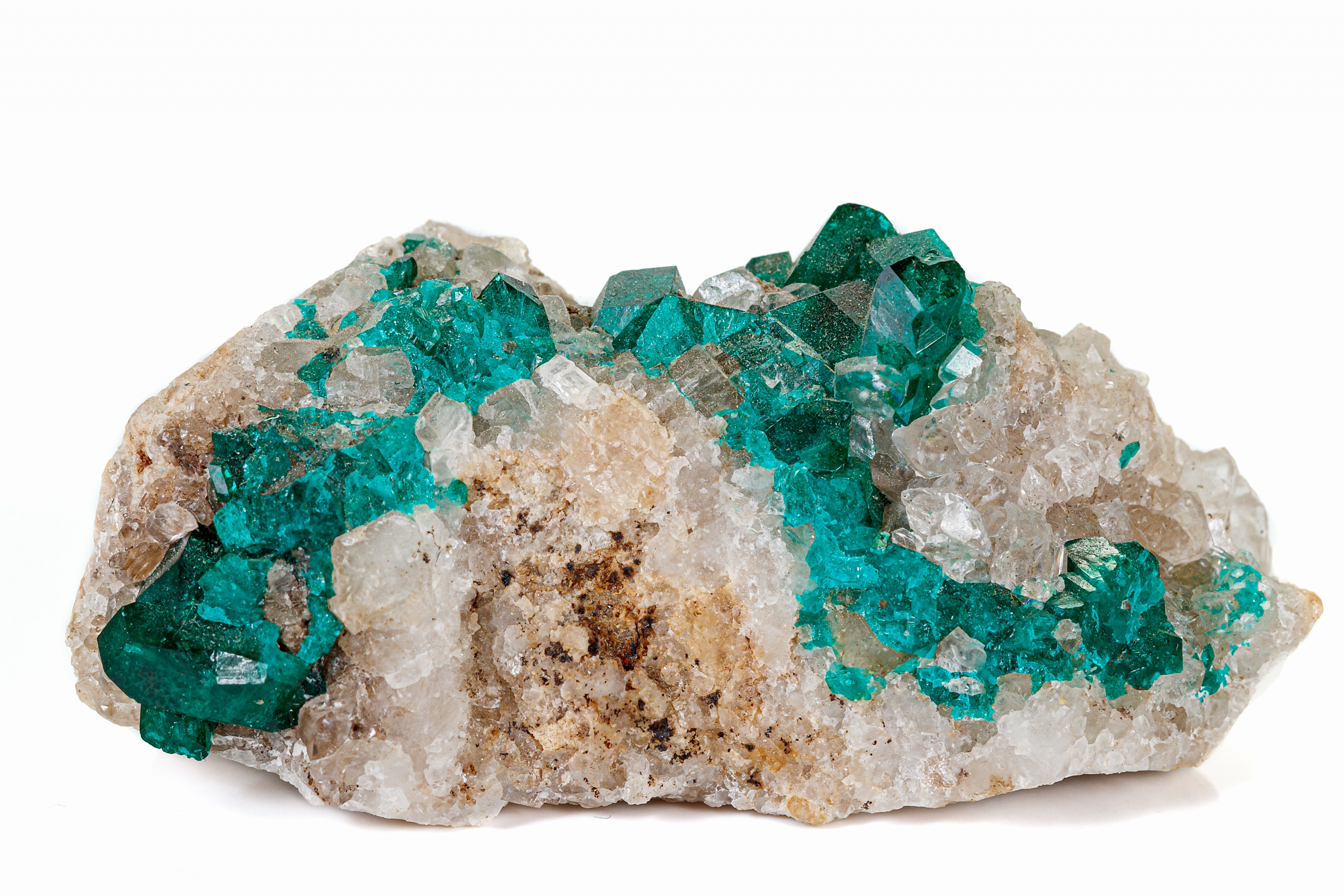

Sodalite and lapis lazuli get mixed up constantly, both deep blue, both sold as tumbled stones and carvings side by side, and the confusion is reasonable: lapis lazuli is actually a rock that usually contains sodalite as one of its ingredients, not a separate, unrelated mineral competing for the same shelf space.
A mineral and the rock that contains it
Sodalite is a single mineral, a sodium aluminum silicate chloride, that forms its own blue color from sulfur-related structural defects rather than trace metal impurities, a different mechanism than most trace-element coloring. Lapis lazuli, by contrast, is a rock, a mix of several minerals, primarily deep-blue lazurite, along with white calcite and metallic gold flecks of pyrite. Sodalite is often present in lapis lazuli too, contributing its own blue alongside lazurite’s, which is exactly why the two materials can look so similar: sodalite is sometimes a genuine ingredient inside lapis lazuli, not just a lookalike sold in its place.
How to tell them apart
The clearest visual difference is lapis’s pyrite flecks, sodalite almost never contains pyrite, and lapis without any gold-colored inclusions at all is unusual and worth a second look. Sodalite also tends toward a more uniform blue with occasional white calcite veining rather than lapis’s typically denser, more varied speckling, and it’s slightly softer, around 5.5 to 6 on the Mohs scale versus lapis’s rock hardness, which varies depending on how much calcite versus lazurite it contains.
Both owe their color, ultimately, to sulfur chemistry locked into their structures in different ways, one a single mineral’s own defect-driven blue, the other a whole rock built partly around a mineral, lazurite, that does something chemically similar.