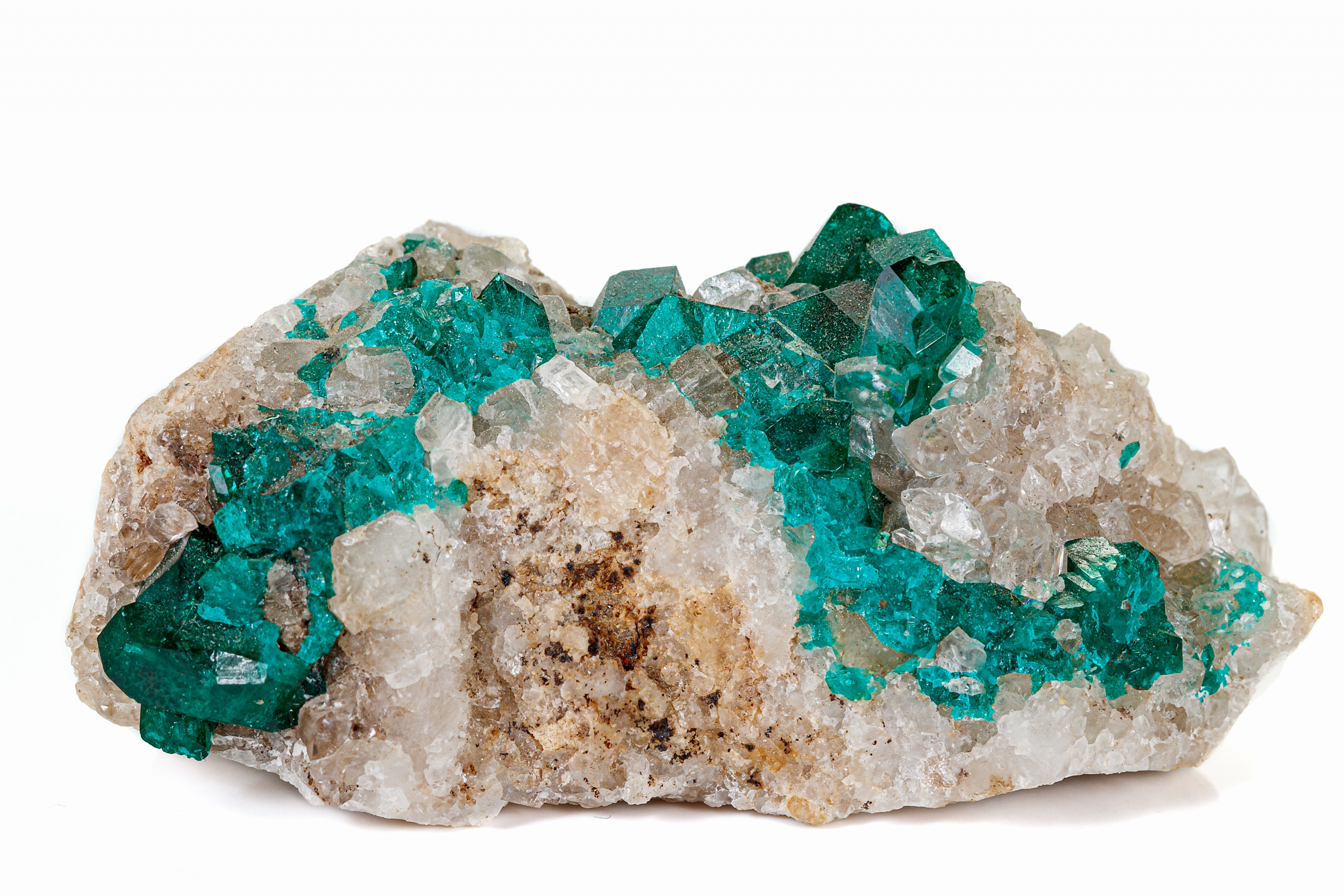

It’s a strange thing to realize: some of the sharpest, most colorful crystals in a mineral collection didn’t grow in a slow, cool cave or a deep, pressurized vein. They grew inside solidified lava, in cavities left behind by gas that never got a chance to escape.
From Gas Bubble to Crystal Cavity
As a basalt lava flow cools and hardens, gas trapped inside it forms bubbles, called vesicles, scattered through the rock the same way bubbles form in bread dough. Once the rock solidifies, those bubbles remain as empty, rounded cavities. On their own, they’re just holes. What happens next is what makes them interesting.
Filling the Gap, One Layer at a Time
Over the following millions of years, mineral-rich groundwater percolates through the porous, fractured basalt and slowly deposits new minerals inside those cavities, silica, calcium, aluminum, and more, layer by layer, crystal by crystal. A filled vesicle like this gets its own name: an amygdule, from the Greek word for almond, describing its typical shape. Depending on the exact water chemistry, an amygdule can fill with quartz, calcite, or one of dozens of zeolite minerals, an entire mineral family defined mostly by where and how they form rather than by a single chemistry.
A Few Familiar Names, One Shared Origin
We’ve written about several minerals that form exactly this way. Stilbite, with its distinctive bowtie-shaped crystal bundles, is a classic amygdule zeolite. Prehnite commonly grows alongside it in the same basalt cavities. Both are common finds in the trap-rock quarries of New Jersey and the broader Northeast, including the historic Paterson trap-rock district we cover separately. Even simple clear quartz frequently fills basalt cavities this way, which is part of why New Jersey quartz specimens look and formed so differently from, say, a quartz point grown in a hydrothermal vein elsewhere.
Our New Jersey mineral mix on matrix shows that variety on a single specimen, more than one mineral formation visible on classic trap-rock matrix. We also carry New Jersey quartz specimens formed the same way, from Paterson’s Upper New Street locality and from elsewhere in the state. The next time you’re holding a crystal cluster, it’s worth asking not just what it’s made of, but what kind of empty space it had to grow into first.