
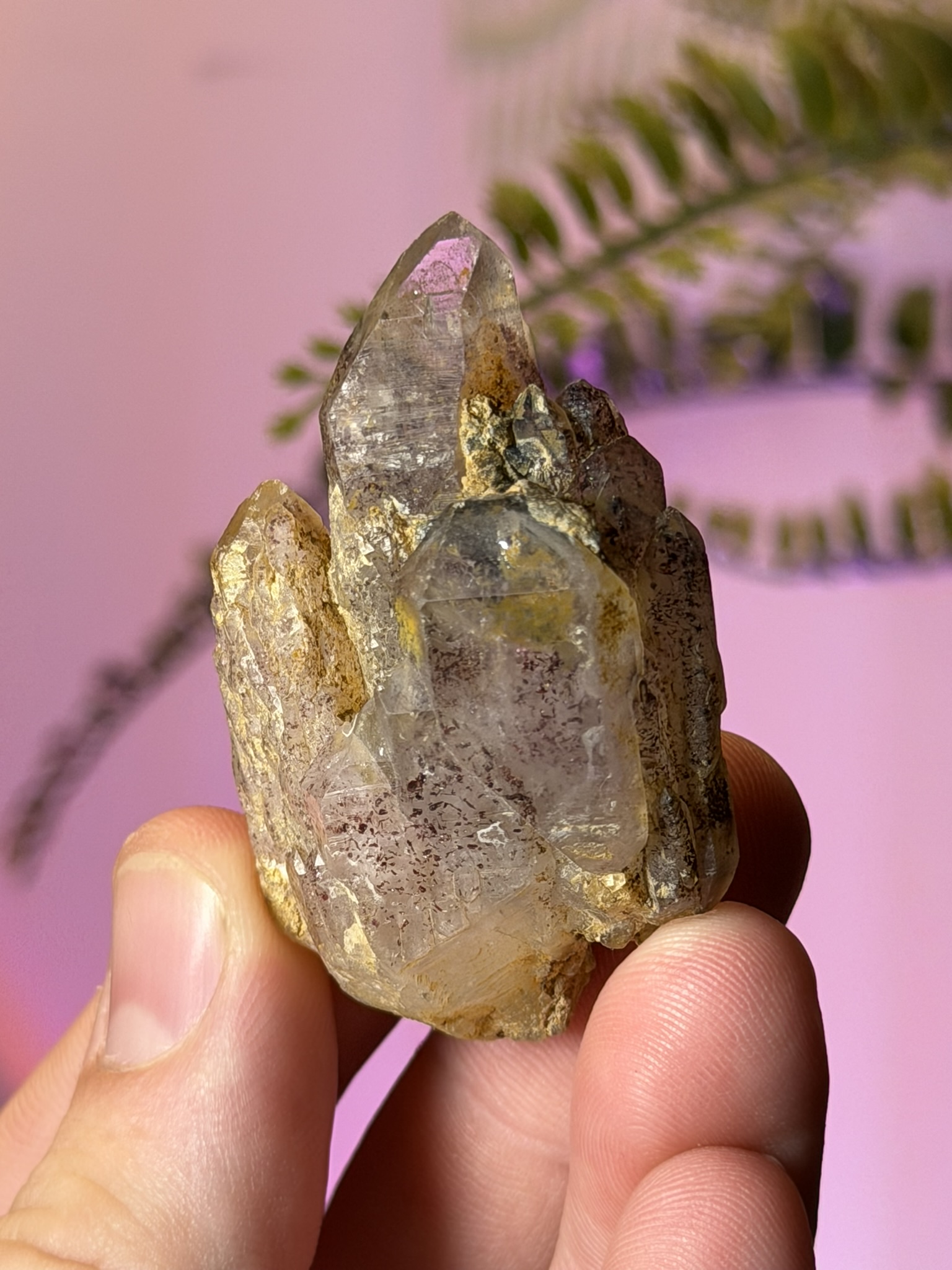
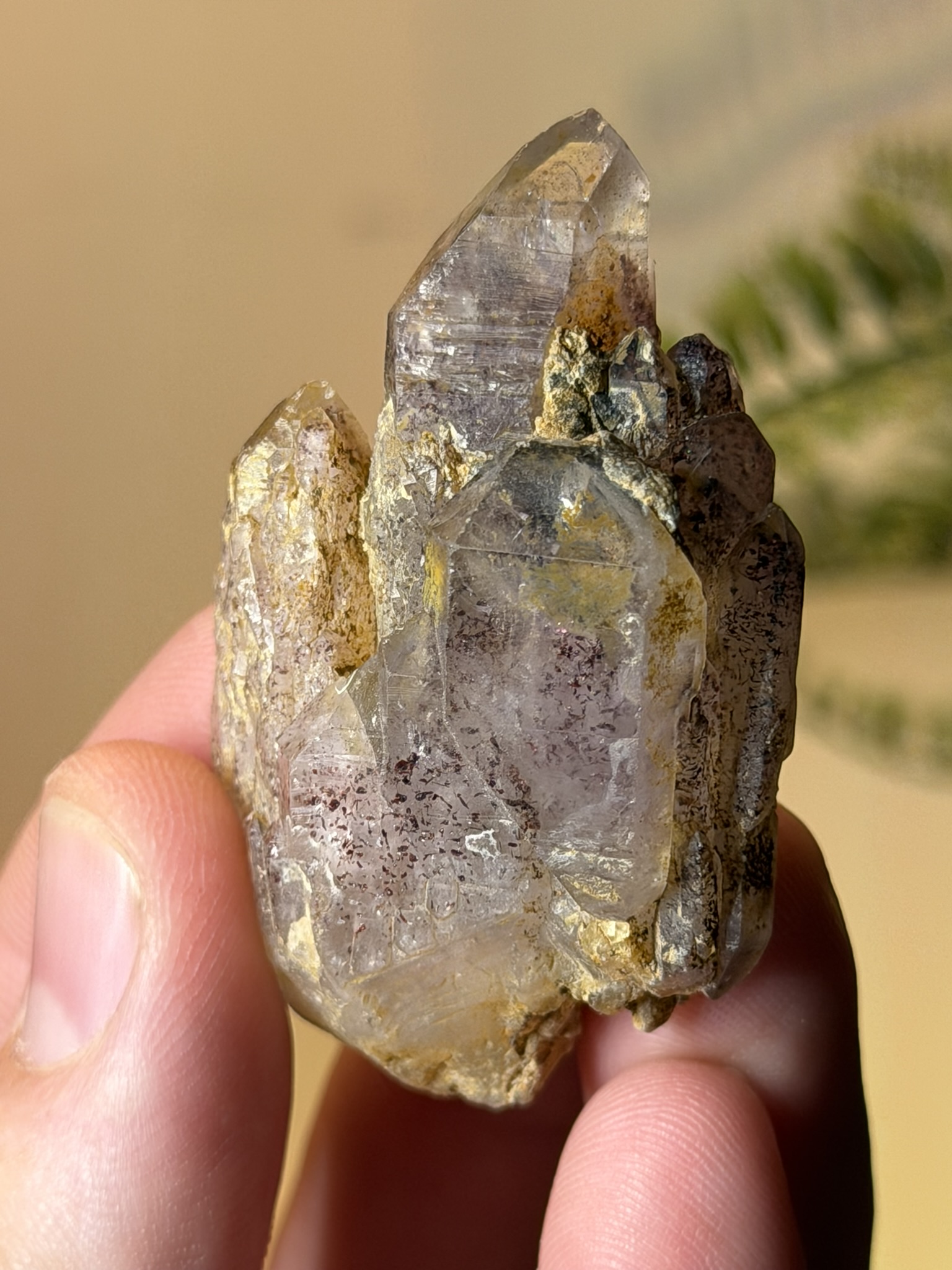
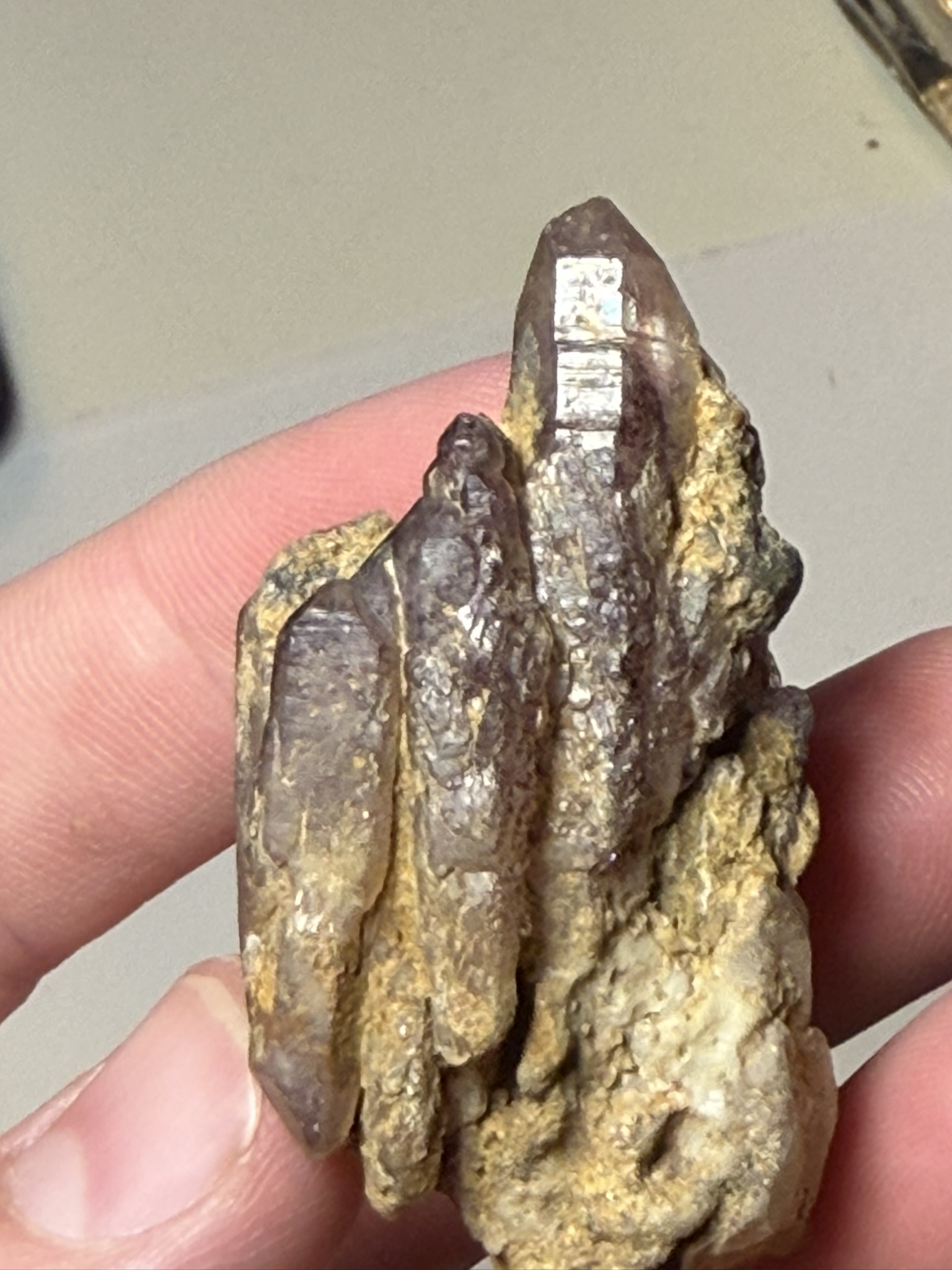
Amethyst is the purple variety of quartz, colored by trace iron impurities that have been altered by natural irradiation within the earth. The Brandberg Mountain area of Namibia — and the Tafelkop locality in particular — is prized among collectors for crystals with unusually high clarity and gemmy transparency, often growing right alongside included smoky quartz within the same cluster.
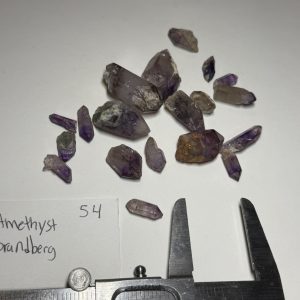
This is a natural cluster of gemmy amethyst points from Tafelkop, showing that classic Brandberg clarity along with some smoky zoning. At Mohs hardness 7, it’s durable enough for regular display and handling, though the more delicate terminations are best kept away from repeated knocks.
Inside the Amethyst
The purple in your palm is quartz plus two accidents of geology — trace iron and millions of years of natural background radiation.
The story: Amethyst forms the same way most quartz crystals do — silica-rich fluid cooling slowly inside a gas cavity in volcanic rock — except this fluid carried a trace of iron. Left alone for long enough, natural background radiation in the surrounding rock converts that iron into the color centers that give amethyst its purple, often banding from pale lilac to deep violet within a single point.
Why collectors chase it: Depth and evenness of color are what separate an ordinary piece from a great one — the deepest, most saturated purple comes from a handful of localities worldwide, and Brandberg, Namibia (the source of several pieces in this shop) is prized for sharp, gemmy double-terminated points, sometimes with smoky phantom zoning inside the same crystal.
Care: Quartz is tough (Mohs 7), but amethyst’s color itself is the delicate part: sustained direct sunlight can fade it over years, and real heat (300–400°C) permanently turns it citrine-yellow. Keep it out of a sunny windowsill for long-term display and it will hold its color indefinitely.
Reviews
There are no reviews yet.