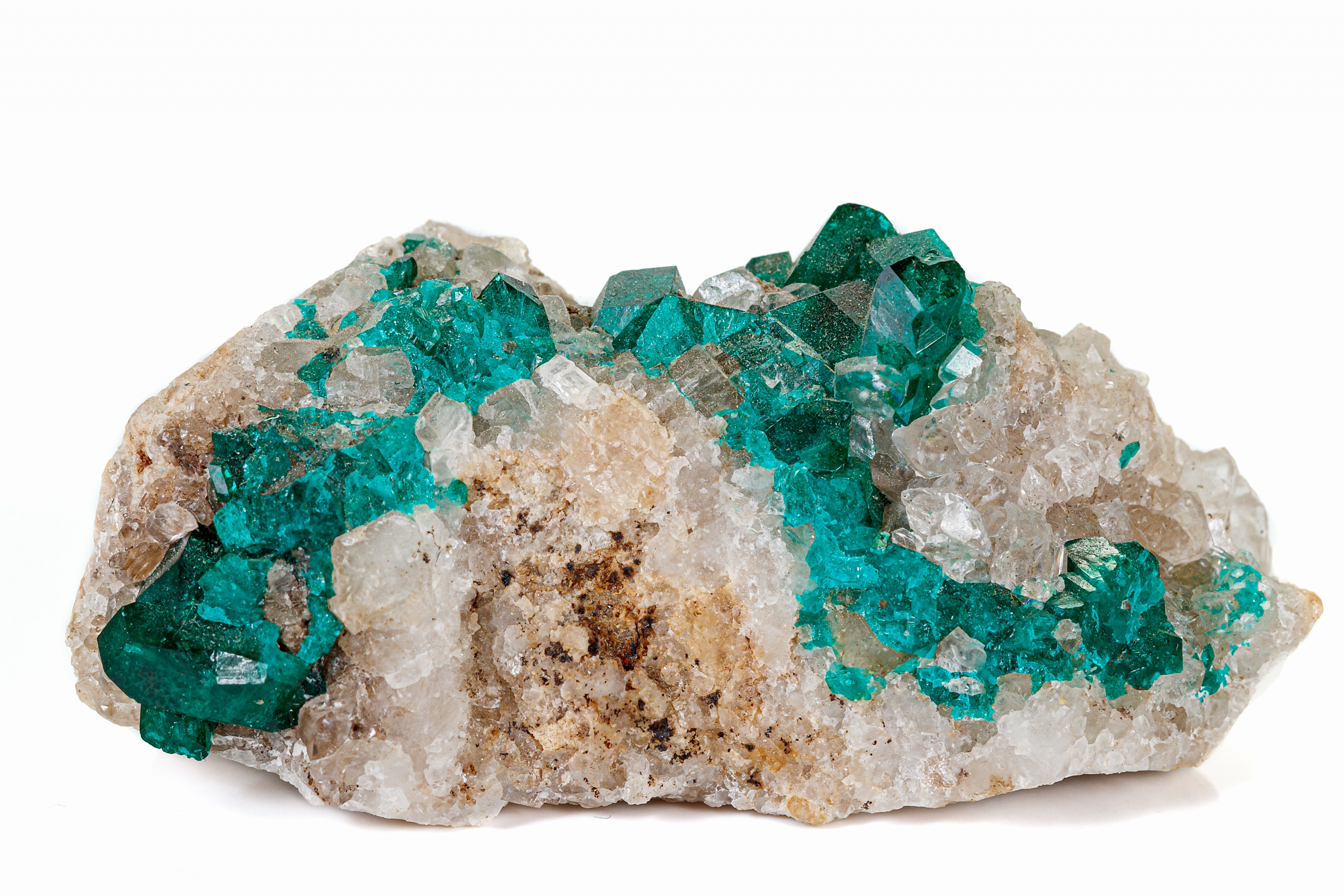

Some elements show up in hundreds of different minerals. Others barely form minerals of their own at all, despite being common in the universe generally. The pattern behind which elements go on to build abundant minerals and which stay geologically rare has more to do with basic chemistry, ion size and charge, than with how much of the element actually exists.
Abundance isn’t the same as mineral diversity
Oxygen and silicon together make up the overwhelming majority of Earth’s crust by weight, and it shows: silicate minerals, built around a silicon-oxygen framework, account for the large majority of all known mineral species and nearly all common rock-forming minerals, quartz, feldspar, mica, garnet, beryl among them. Elements like gold, by contrast, are genuinely scarce in the crust and also chemically reluctant to combine with much of anything, which is exactly why gold usually turns up as a native element rather than forming compounds the way sulfur does.
Why some rare elements still build famous minerals
A handful of genuinely scarce elements still manage to form well-known minerals because their ionic size and charge happen to fit neatly into a common structural framework. Beryllium, rare in the crust overall, slots efficiently into beryl’s structure, which is part of why beryl exists as a recognizable mineral species at all rather than beryllium simply staying dispersed as a trace impurity elsewhere. Charoite’s single known locality is closer to the opposite extreme, a genuinely unusual combination of elements and conditions that has, as far as anyone has found, only ever lined up once.
The periodic table, in other words, isn’t just a chemistry classroom poster, it’s a rough predictor of which minerals should be everywhere and which should be vanishingly rare, and the mineral world generally follows that prediction closely.