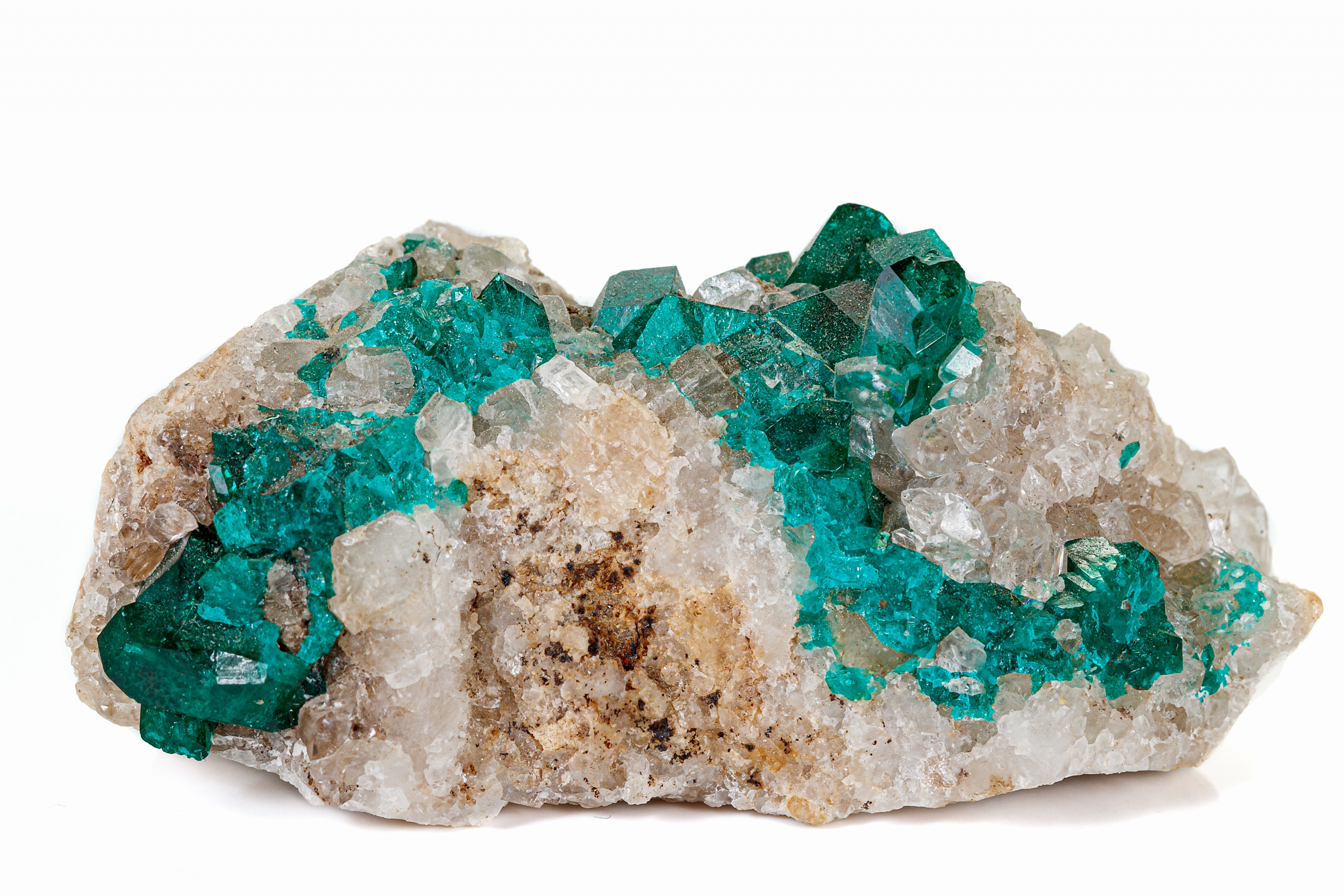

Ruby and sapphire read as two completely different gemstones, one a saturated red, the other classically blue, and both get marketed and priced as though they belong to separate categories. Mineralogically, they’re the same mineral: corundum, aluminum oxide, Al2O3, with the color difference coming down entirely to which trace element happened to be nearby when each crystal formed.
Chromium versus everything else
Pure corundum is colorless. Trace chromium substituting into the aluminum sites turns it red, and by definition, any red corundum is called ruby. Every other color, including blue from trace iron and titanium together, green, yellow, and colorless, gets called sapphire, with the color named as a qualifier, “pink sapphire,” “yellow sapphire.” It’s a naming convention rather than a chemical one, ruby is simply the one color that earned its own word, a similar story to why brown quartz gets called smoky and purple quartz gets called amethyst instead of both just staying “colored quartz.”
Second-hardest, for a reason
Corundum sits at 9 on the Mohs scale, second only to diamond, a direct consequence of aluminum and oxygen atoms packing into an unusually dense, tightly bonded hexagonal structure. That hardness is exactly why the reference scale still uses corundum as its second-from-top benchmark two centuries after Friedrich Mohs put the list together, and why industrial corundum, mostly synthetic today, remains a standard abrasive for sandpaper and grinding wheels.
The chromium that turns corundum into ruby is genuinely rare in the right geological setting, aluminum-rich rock that’s also somehow picked up chromium, which is normally found in completely different rock types. That geological coincidence is a large part of why natural ruby commands such a premium over sapphire of comparable size and clarity: it’s not a different mineral, just a much less likely one.