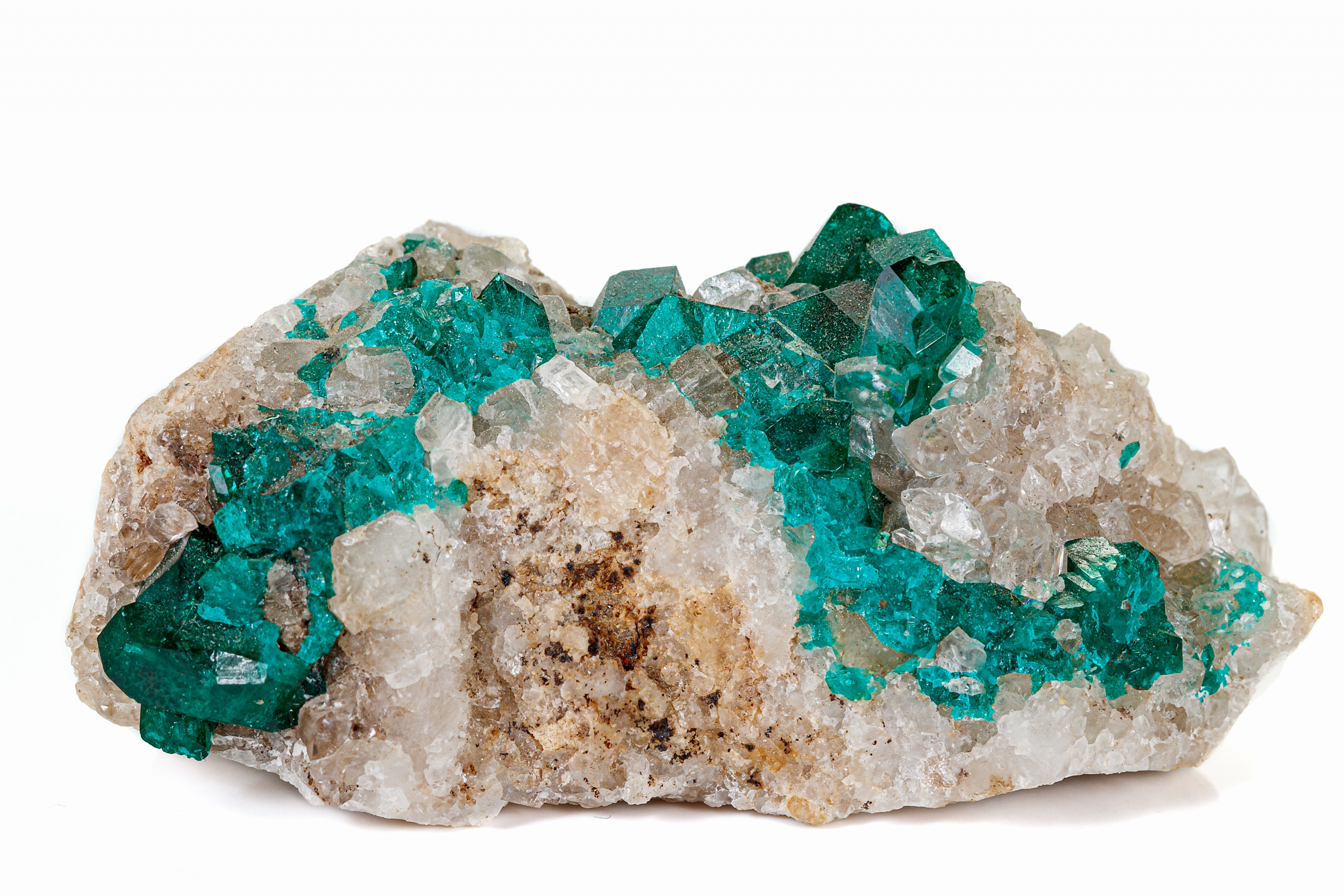

Pyrite has been embarrassing prospectors for centuries, and it’s easy to see why. Freshly broken, it throws back a brassy, metallic glint that reads as gold to an untrained eye, especially underwater in a streambed where sunlight scatters across the facets. It’s also nothing like gold once you know two simple tests, and the mineral’s real chemistry is more interesting than the myth around it.
Iron and sulfur, not gold
Pyrite is iron sulfide, FeS2, formed wherever iron-rich fluids meet sulfur in low-oxygen conditions, commonly in sedimentary rock, hydrothermal veins, and coal seams. Its crystals favor the cubic system, often growing as sharp, near-perfect cubes with faint parallel striations across each face, a habit distinctive enough that a trained collector can usually identify pyrite from crystal shape alone before ever checking color.
The two tests that end the argument
Gold is soft, a 2.5 to 3 on the Mohs scale, and dense enough that a nugget feels notably heavy for its size. Pyrite is harder, around 6 to 6.5, hard enough to scratch glass, and its streak, the color it leaves when scraped across unglazed porcelain, comes out greenish-black. Gold’s streak stays gold-colored no matter how you test it, because unlike pyrite it doesn’t change form when powdered. The streak test alone settles more “is this gold” questions than color ever will.
Pyrite shows up constantly alongside genuinely valuable ore bodies, which is exactly why it earned its nickname and exactly why so many nineteenth-century prospectors got a hard lesson in mineral identification. It’s also, on its own terms, one of the more satisfying crystal habits in mineralogy: those cubes aren’t an accident, they’re a direct expression of how the mineral’s atoms pack together, the same underlying logic covered in our piece on the seven crystal systems.