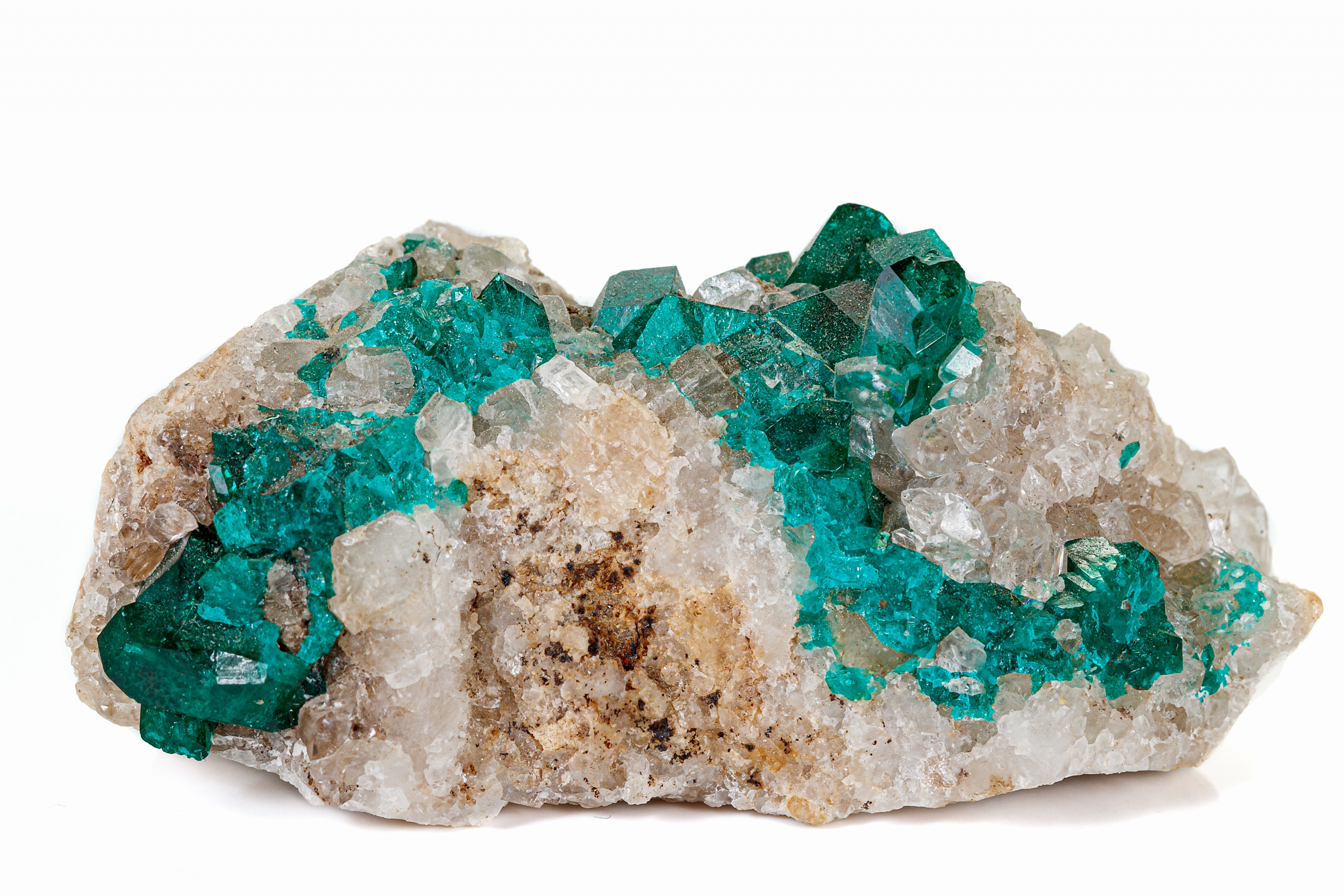
Mineral names usually come from a Greek root, or a place, or a color. Prehnite broke that pattern first. It was the first mineral in history named directly after a person.
Named for a colonial governor, not a scientist
The man was Colonel Hendrik von Prehn, a Dutch military officer stationed at the Cape of Good Hope in the late 1700s. He wasn’t a mineralogist. He just happened to bring an unusual green mineral back to Europe from the Cape Colony. When German mineralogist Abraham Gottlob Werner formally described it in 1790, he named it after Von Prehn, setting a precedent mineralogy has followed ever since. Thousands of minerals carry a person’s name today. Prehnite got there first.
South Africa’s first mineral, too
It’s also recognized as the first mineral ever formally described from South Africa. The original specimens turned up near Cradock, inside Karoo dolerite, dark iron-rich igneous rock that intruded into much older sedimentary layers around 180 million years ago, during the early breakup of Gondwana. That dolerite chemistry, heavy in calcium and aluminum, is more or less exactly the recipe prehnite needs.
Why it looks like a bunch of grapes
Prehnite almost never forms sharp, pointed crystals. Instead it grows in botryoidal masses, rounded clusters built out of countless tiny radiating crystals fused together, usually lining cavities in basalt or dolerite the same way zeolites like stilbite do. The color runs from pale mint to a richer apple green, from trace iron, though colorless and yellowish versions turn up too. Some collectors call it “grape agate’s cousin,” which is a little misleading since the two aren’t related species at all. It’s just the resemblance.
It’s harder than it looks: 6 to 6.5 on Mohs, plenty tough for jewelry despite that soft, rounded form. Good deposits beyond South Africa turn up in Australia, India, Scotland, and the trap rock quarries of New Jersey and Michigan’s Lake Superior copper district. During World War II, optically clear calcite mined at South Africa’s Soetwater deposit, right alongside prehnite, ended up in gun-sighting equipment. And every so often prehnite forms as a pseudomorph, replacing earlier calcite crystals atom by atom while keeping the calcite’s original shape, a slow-motion impersonation of a mineral it isn’t.
Von Prehn probably had no idea any of this was coming when he packed up a few green rocks to take home.