
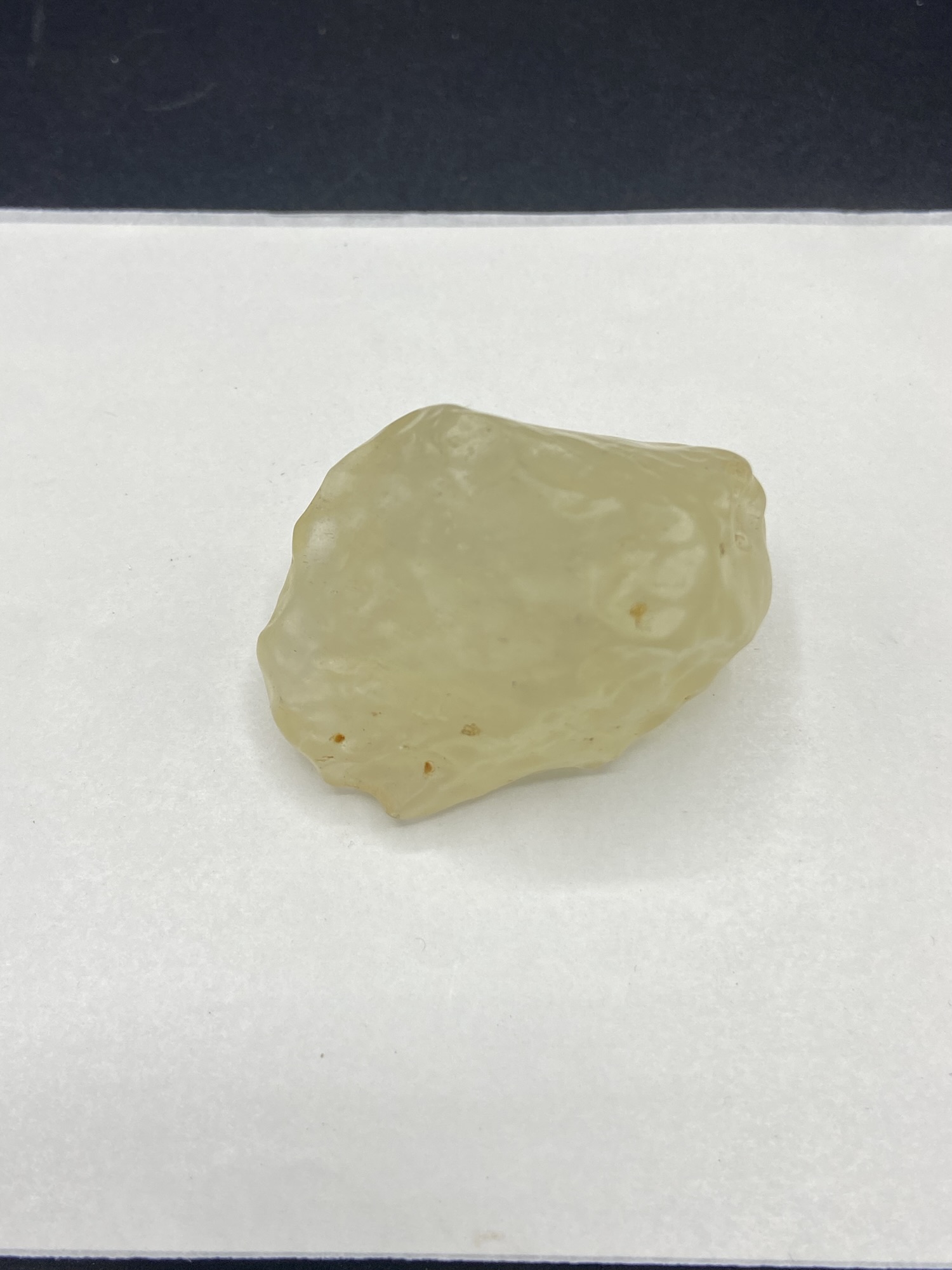
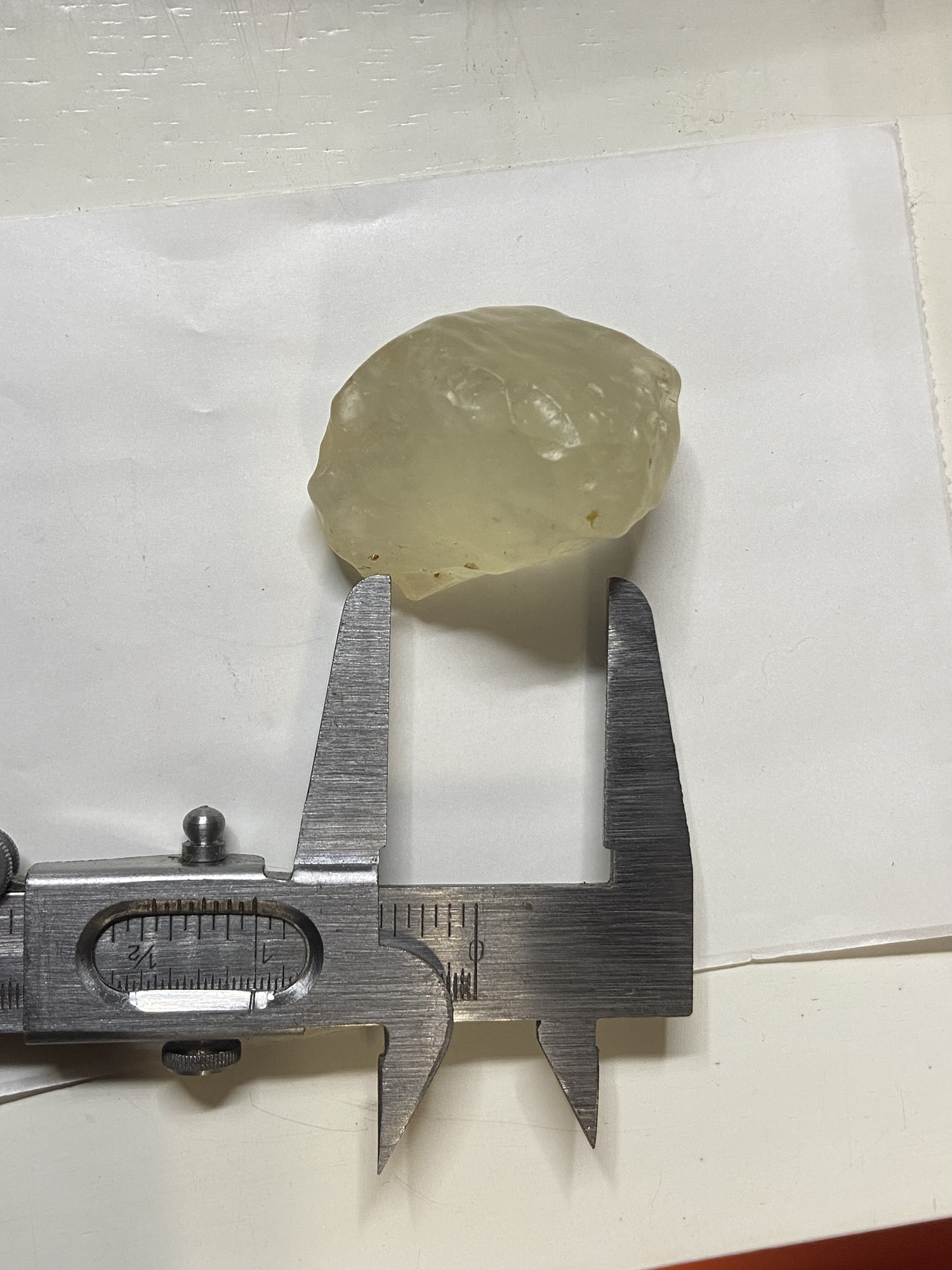
Libyan Desert Glass is a natural, nearly pure silica glass (about 98% SiO₂) found only in a small strewn field in the Great Sand Sea of western Egypt. It formed roughly 29 million years ago, and current research points to an airburst or impact event — the intense heat of a meteorite exploding in the atmosphere or striking the ground — melting the local sandy soil into glass almost instantly. It isn’t volcanic and isn’t man-made; this one region is the only known source of Libyan Desert Glass on Earth. (Its most famous piece is a scarab carved from Libyan Desert Glass and set into Tutankhamun’s pectoral jewelry, recovered from his tomb.)
This is a larger example of the material, showing the pale yellow-to-tan, semi-translucent color and natural surface texturing from tens of millions of years of desert weathering. Larger pieces like this one are less common than small fragments and chips, since much of the strewn field material is fairly small — making size itself part of what drives rarity and value here.
A genuine, sizable specimen for tektite and impactite collectors, or a strong display piece for anyone drawn to minerals with an unusual origin story.
Inside Libyan Desert Glass
Not a mineral, not a meteorite — a piece of the Sahara that was flash-melted into glass some 29 million years ago.
The story: An ancient airburst or impact event over the Sahara superheated desert sand past 1,700°C, melting it into glass that rained back down across a single stretch of what is now the Egypt–Libya border. It’s classified as impact/airburst glass rather than a true meteorite — the glass is melted Earth, not fallen space rock.
Why collectors chase it: The origin story alone is remarkable, and a famous carved piece sits at the center of Tutankhamun’s breastplate — but the honey-yellow translucency of a raw piece is striking on its own.
Reviews
There are no reviews yet.